Joburg to unveil Desmond Tutu Precinct vision at State of the City Address
The church, on Plein Street, remains one of Johannesburg’s most important religious and heritage landmarks.

St Mary’s Anglican Cathedral in Johannesburg. Picture: Our City News.
The City of Johannesburg’s State of the City Address will this year take place on Wednesday inside St Mary’s Anglican Cathedral, with the City using the symbolic inner-city venue to unveil plans for the proposed Archbishop Desmond Tutu Precinct an ambitious urban regeneration project aimed at reshaping a this derelict section of the Johannesburg CBD.
Not everyone is, however, hopeful it will come to fruition with city heritage experts wondering if this is another fruitless attempt to regenerate the CBD given the state of finances the city finds itself in.
St Mary’s Cathedral has for years battled visible urban decay, including overflowing litter, informal trading congestion, deteriorating public infrastructure and sanitation problems.
Church officials previously complained bitterly about people urinating against building’s walls, lack of bylaw enforcement, illegal structures, crime and worsening disorder around the precinct.
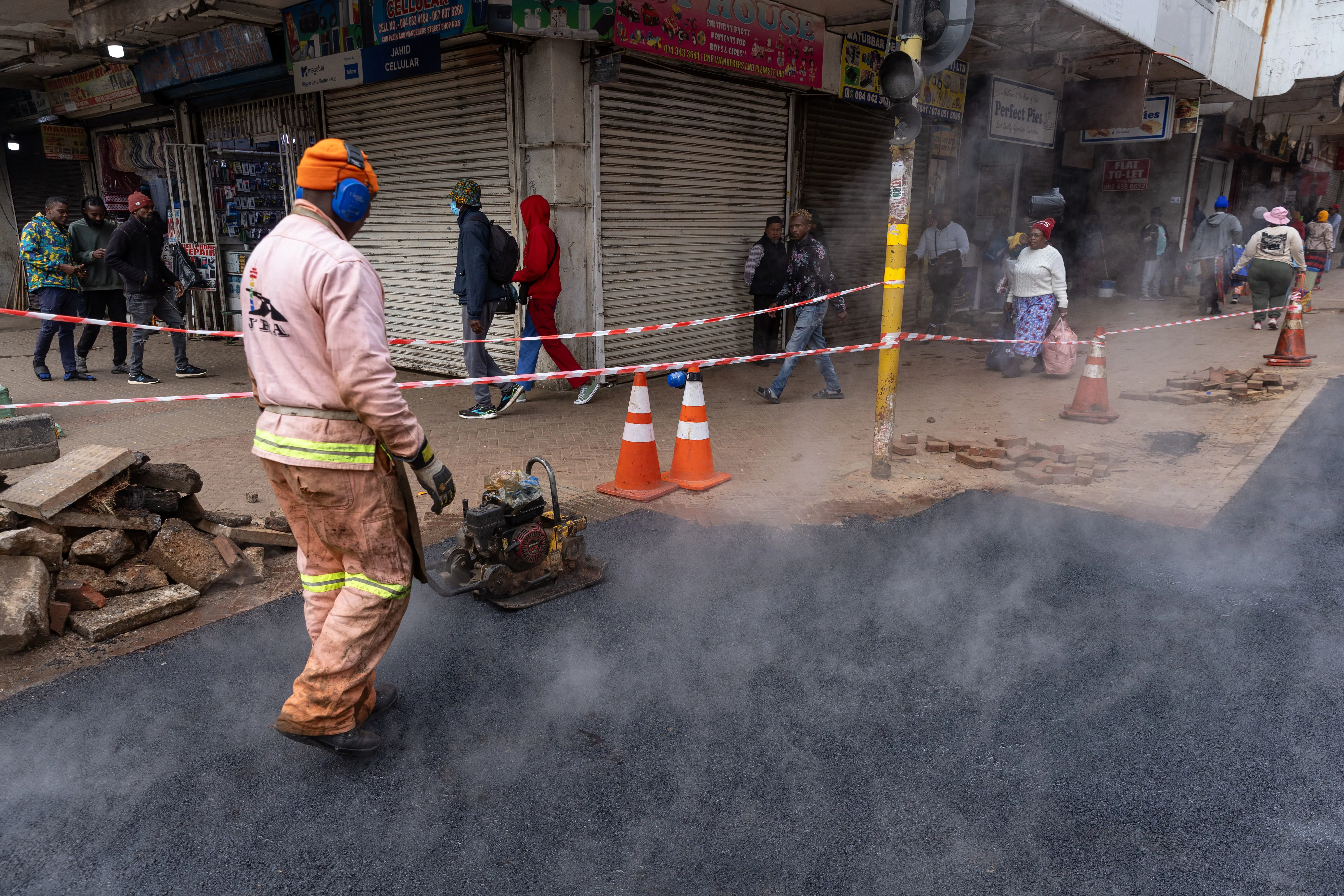
Johannesburg Roads Agency fixing the roads ahead of the City of Johannesburg’s State of the City Address. Picture: Our City News.
The church, on Plein Street, remains one of Johannesburg’s most important religious and heritage landmarks, continuing to serve congregants, inner-city communities and civic events in the heart of the CBD.
Construction began in 1906 and the neo-Gothic building was designed by renowned architect Herbert Baker, whose work helped shape much of Johannesburg and Pretoria’s early civic architecture.
Built using locally quarried stone, St Mary’s later gained international significance through its association with Archbishop Desmond Tutu, who became the first Black Anglican Dean of Johannesburg there in 1975.
Over decades, the cathedral has functioned not only as a place of worship, but also as a centre of social justice activism, civic reflection and public gatherings during some of South Africa’s most turbulent political periods.
The City of Johannesburg confirmed that mayor Dada Morero will deliver the State of the City Address (SOCA) at the cathedral on May 20 at 1pm the final such address before local government elections later this year.
Alongside the announcement, the City has formally outlined plans for the development of the Archbishop Desmond Tutu Precinct, a major inner-city urban regeneration initiative around the church.
The project is being driven by the City’s Transport Department through the Johannesburg Development Agency (JDA) as part of Johannesburg’s Inner-City Urban Regeneration Programme.
According to City planning documents, the precinct study area stretches from Sophie De Bruyn Street in the north to Commissioner Street in the south, and from Harrison Street in the west to Claim and Mooi streets in the east, covering Wards 59, 60, 123 and 124.
While detailed engineering plans have not yet been released publicly, reports reveal several physical interventions around the cathedral node, including the closure of Hoek Street to motor vehicles to create a more pedestrian-friendly public environment around the church.
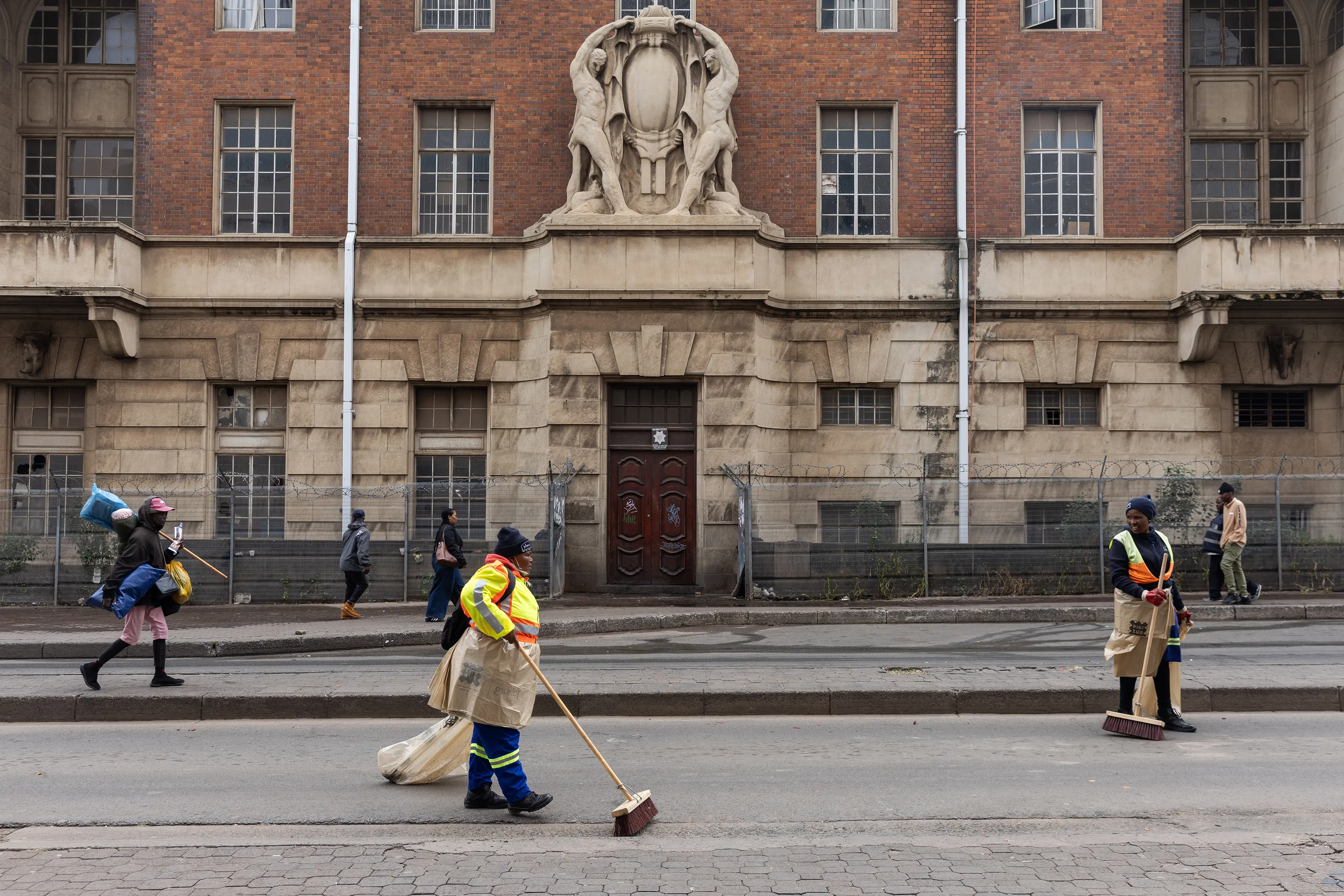
Johannesburg Roads Agency cleaning the roads ahead of the City of Johannesburg’s State of the City Address. Picture: Our City News.
The City has also initiated a public participation process on the proposed renaming of four streets surrounding the cathedral precinct:
- Plein Street would become Desmond Tutu Street;
- Wanderers Street would become Simeon Nkoane Street;
- De Villiers Street would become Trevor Huddleston Street; and
- Hoek Street would become Cathedral Street.
The proposed names seek to reinforce the precinct’s heritage and liberation-history identity, linking the area to prominent anti-apartheid and church figures associated with Johannesburg’s social justice history, according to the reports.
Speaker of Council, Margaret Arnolds described the choice of St Mary’s Cathedral for this year’s SOCA as symbolic of Johannesburg’s efforts to reclaim and revitalise its historic inner city.
“The venue is emblematic of our rich heritage and a beacon of hope as we work towards revitalising Johannesburg,” Arnolds said in a statement.
“The Archbishop Desmond Tutu Precinct is a vital part of this revitalisation, encouraging a safe and inclusive environment for all Jo’burgers”.
Flo Bird, founder of the Johannesburg Heritage Foundation, said she doubted this project would come to fruition given the finances of Joburg.
“The City announced a similar plan in 2022 and nothing came of it and given the current situation of there being no money for basic infrastructure maintenance, it is doubtful it will ever happen. This is a very important precinct and should be maintained,” she added.
This story is produced by Our City News, a non-profit newsroom that serves the people of Johannesburg.