African Football at a Crossroads: Governance, Accountability and the Battle for Control
Who is actually running African football, and are the people running it building sustainable football systems or simply managing crises from one tournament to the next?

Bafana Bafana
African football is facing a moment of reckoning.
Across the continent, football remains one of the most powerful social and economic forces. It produces national heroes, fills stadiums, creates employment and gives millions of young people a pathway into professional sport.
But behind the passion and the spectacular performances on the pitch is an increasingly uncomfortable question:
Who is actually running African football, and are the people running it building sustainable football systems or simply managing crises from one tournament to the next?
From Nigeria to South Africa, Senegal to Egypt and Morocco, the answers are very different.
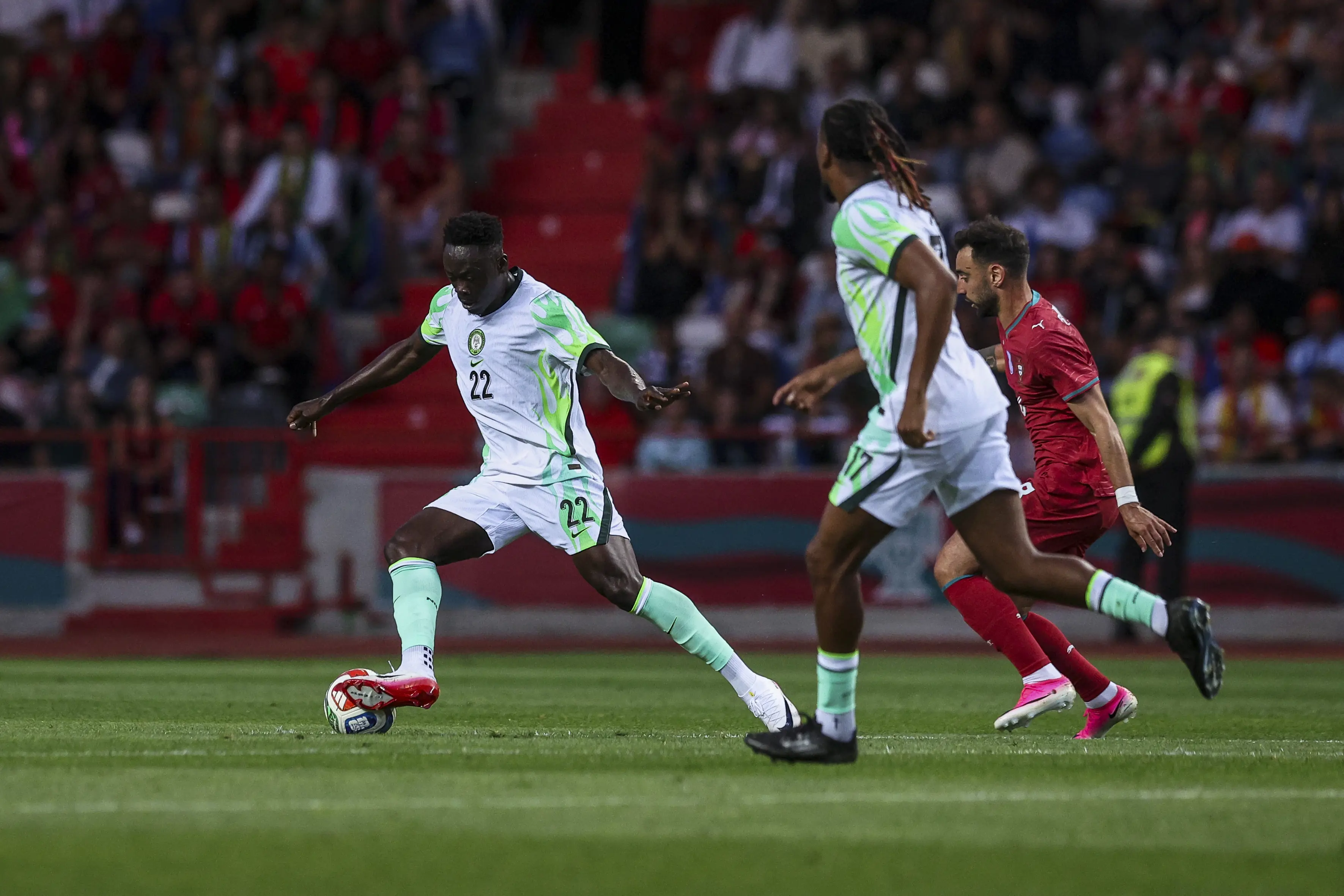
Nigeria currently represents perhaps the most dramatic example of what happens when results, governance and public confidence collide.
Nigeria: A football giant confronting an administrative crisis
Nigeria’s football crisis has moved beyond disappointing results.
The Super Eagles failed to qualify for the 2026 FIFA World Cup, while the Super Falcons suffered an even more historic setback.
Nigeria’s women’s national team, which had appeared at every FIFA Women’s World Cup since the competition began in 1991, will miss the 2027 tournament after losing 2–1 to South Africa in the African playoff in Morocco.
The result has triggered intense scrutiny of the Nigeria Football Federation (NFF) and its president, Ibrahim Musa Gusau.
The NFF has apologised to President Bola Tinubu and Nigerians, while establishing a fact-finding committee to investigate the country’s recent failures.
But the argument in Nigeria is increasingly that this is not simply about one coach, one team or one bad tournament.
It is about the system.
The National Sports Commission has moved to cancel the NFF’s planned electoral process and is considering a normalisation committee to oversee the federation for a transitional period and address structural problems before a new election.
However, the situation remains fluid. The NSC has specifically denied reports that the Federal Government ordered the NFF board to resign immediately.
That distinction matters.
There is a difference between the government removing a football federation and a government working with football stakeholders to facilitate reform. FIFA’s statutes place significant emphasis on the autonomy of national associations, meaning any intervention has to be handled extremely carefully.
There is also an important debate about Nigeria’s electoral system.
Critics have argued that the NFF’s electoral college is too narrow and does not adequately represent the country’s enormous football community — including clubs, coaches, former players, referees and other stakeholders.
That may ultimately be the bigger question.
Can Nigeria change the people at the top without changing the system that produces the leadership?
If the answer is no, then another election could simply reproduce the same problems.
South Africa: Money, governance and the VAR battle
South Africa’s football challenges look different, but the underlying issue is remarkably similar: accountability.
South African football has considerable infrastructure, commercial value and one of Africa’s strongest domestic leagues. The Premier Soccer League remains one of the continent’s most commercially developed competitions.
Yet the country’s football administration is currently embroiled in a very public confrontation over the implementation of Video Assistant Referee (VAR) technology.
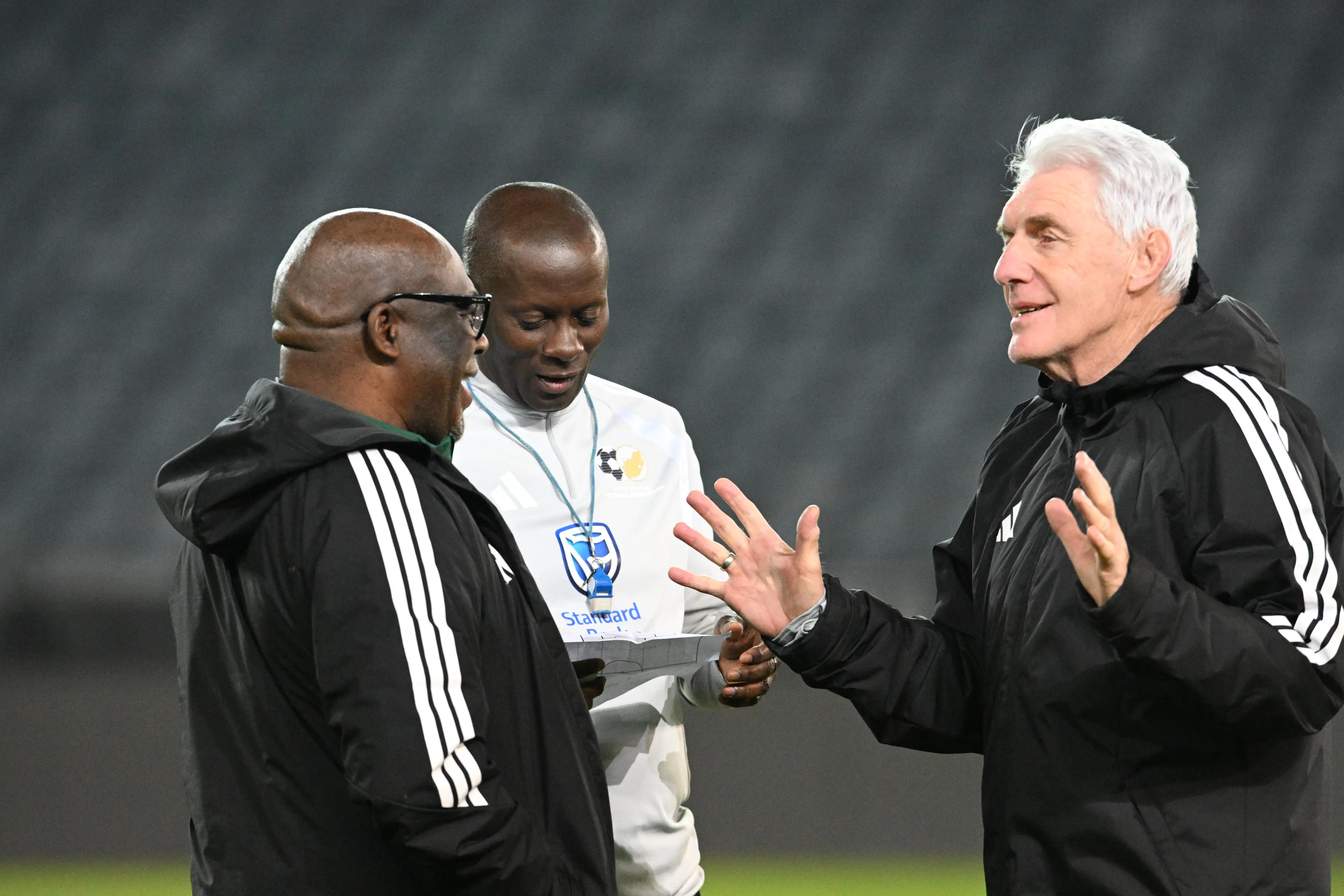
Sports Minister Gayton McKenzie has demanded that the South African Football Association return R13 million provided by the state for the implementation of VAR. McKenzie says the money was provided to assist the project but that the technology has still not been implemented
This dispute is bigger than VAR.
VAR has become a symbol of a much broader argument about whether South African football’s institutions are moving quickly enough, whether public money is being properly utilised and where responsibility lies when projects fail to materialise.
The minister says he has done what was required of him.
SAFA, meanwhile, remains the football authority responsible for the implementation of the system under football’s governance framework.
That creates a difficult situation.
Government can provide money and policy support. The football federation controls football administration. The league has its own commercial interests and structures.
When those responsibilities collide, the public is left asking:
Who is accountable?
And that is precisely the question African football needs to answer more consistently.
Senegal: Stability must now be converted into long-term development
Senegal offers another interesting case.
The country has established itself as one of Africa’s strongest football nations, with success at international level and a generation of players who have competed at the highest levels of European football.
But Senegal is also going through a period of transition.
Following the country’s early exit from the 2026 World Cup, the Senegalese Football Federation appointed Patrick Vieira as the new national-team coach. Vieira replaces Pape Thiaw and will take charge as Senegal prepares for the next phase of its international programme.
The important point is that Senegal’s challenge is not necessarily one of collapse.
It is about maintaining standards.
The Senegalese federation under president Abdoulaye Fall has also promoted a 2025–2029 development roadmap known as PRAXIS, including efforts to engage regional leagues, districts, clubs, coaches, referees and other stakeholders.
That is an important lesson for the continent.
Successful football nations cannot afford to think only about the senior national team.
They need functioning regional structures, youth development, coaching education, refereeing, club football and clear pathways from grassroots football to elite competition.
Senegal now has to prove that its recent success can become institutional rather than dependent on one generation of players.
Egypt: A football culture that continues to build around institutions
Egypt is another important example.
The country has one of Africa’s deepest football cultures, supported by powerful clubs, a huge domestic audience and a long history of continental success.
Its national team also performed strongly at the 2026 FIFA World Cup, reaching the round of 16. The Egyptian state publicly recognised the team’s performance, with President Abdel Fattah El-Sisi receiving and honouring the players and technical staff.
But what is interesting about Egypt is not simply the celebration.
The Egyptian Football Association continues to work across multiple layers of the game.
Recent decisions have included support for national teams, youth competitions, women’s football, futsal, club support and refereeing structures.
Egypt understands something important:
Football is an ecosystem.
The senior national team cannot be separated from the domestic league, clubs, academies, coaches, referees and youth competitions.
The challenge for Egypt is to ensure that its enormous football tradition continues to produce modern structures capable of competing with the continent’s fastest-rising football nations.
Morocco: The model many African countries are watching
And then there is Morocco.
If Nigeria represents a football system under pressure, Morocco increasingly represents what can happen when football development is treated as a long-term national project.
Morocco’s transformation has not happened overnight.
The Royal Moroccan Football Federation, under Fouzi Lekjaa, has pursued a strategy that links elite national teams with infrastructure, youth development, women’s football, club development and governance.
The results have been extraordinary.
Morocco’s men’s national team rose from 84th in the FIFA rankings in 2018 to sixth in the world by 2026, according to the FRMF.
But the more important achievement is that the country has attempted to build an ecosystem around that success.
The FRMF’s current development programme includes investment in infrastructure, stronger youth competitions, improved player development, club marketing, supporter management and better organisation of matches.
The federation has also placed greater emphasis on women’s football, including creating a dedicated women’s football structure within the national technical department. (frmf.ma)
And Morocco is now preparing for the 2030 FIFA World Cup alongside Portugal and Spain.
That means the country is not simply asking:
How do we win today?
It is asking:
What must our football system look like in four, eight or ten years?
That is the difference.
Morocco’s football is being managed through a centralised, strategic model in which the FRMF and its president Fouzi Lekjaa have significant influence over the direction of the sport, while reforms are also being introduced to give the national leagues greater independence.
Indeed, the FRMF says the national leagues are expected to achieve full administrative independence by the end of 2026.
That is particularly significant.
Strong central leadership does not necessarily mean that every part of football must remain centrally controlled.
The objective should be to build institutions strong enough to function independently.
The real African football crisis is governance
This is where the stories of Nigeria, South Africa, Senegal, Egypt and Morocco converge.
The crisis facing African football is not a shortage of talent.
Africa has talent.
It is not a shortage of passion.
Africa has arguably more football passion than anywhere in the world.
And it is not necessarily a shortage of money.
There is government funding, sponsorship, FIFA development money, CAF programmes, broadcasting revenue and private investment.
The problem is often how those resources are governed and converted into sustainable football development.
Nigeria has enormous talent but is struggling with governance and representation.
South Africa has one of the continent’s strongest commercial football environments but is locked in a dispute over implementation and accountability.
Senegal has built a successful football culture but now faces the challenge of sustaining that success beyond one generation.
Egypt has the institutions and football culture but must continually modernise them.
Morocco has arguably gone furthest in creating a coordinated long-term development model.
And that leaves African football with a fundamental question.
Who should control football?
Should governments stay completely outside football?
Absolutely not when public money is involved.
But should governments run football federations?
That is equally problematic.
The answer has to be institutional accountability without political capture.
Football federations must be autonomous enough to protect the sport from political interference, but autonomous does not mean unaccountable.
If a federation receives public money, there must be transparency.
If it controls elections, those elections must be credible.
If it controls development programmes, those programmes must produce measurable outcomes.
If national teams repeatedly fail, leadership must be prepared to explain why.
And if football administrators remain in power, they must be judged not only by political alliances and election victories, but by what they actually build.
Africa cannot keep changing coaches instead of systems
For too long, African football has responded to failure by firing coaches.
Lose a tournament — change the coach.
Miss a World Cup — change the coach.
Lose a qualification match — change the coach.
But a coach cannot fix a broken administrative structure.
A coach cannot build football academies overnight.
A coach cannot reform an electoral college.
A coach cannot construct stadiums.
A coach cannot create a professional scouting network.
A coach cannot solve financial accountability.
Those are institutional responsibilities.
The next decade of African football should therefore be about building systems rather than personalities.
Morocco’s example is instructive because the country’s progress has been built around a broader strategy rather than one tournament.
Nigeria’s current crisis presents an opportunity to ask similarly difficult questions.
South Africa’s VAR dispute should be viewed as a governance question rather than merely a refereeing debate.
Senegal must protect the structures that produced its golden generation.
Egypt must continue modernising an already powerful football ecosystem.
And across the continent, football authorities need to understand that the game belongs to millions of supporters and participants, not simply to those who occupy offices in football houses.
The next battle is for the future
African football is at a crossroads.
The continent has everything required to become a genuine global football powerhouse: population, talent, passion, history, competitive leagues and some of the world’s most exciting players.
What it needs is consistency.
It needs administrators who understand that leadership is not about occupying a position.
It is about earning the right to remain there.
The Nigerian crisis is therefore bigger than Ibrahim Gusau.
The South African VAR dispute is bigger than Gayton McKenzie and SAFA.
The Senegalese transition is bigger than Patrick Vieira.
Egypt’s progress is bigger than one national team.
And Morocco’s success is bigger than Fouzi Lekjaa.
These are ultimately questions about institutions.
Because African football does not need another generation of administrators who simply inherit problems.
It needs leaders capable of building systems that survive them.
The future of African football will not be decided only on the pitch. It will be decided in the boardrooms, development centres, academies, leagues and football federations where the next generation of the game is being built.
Never miss a major story. Get breaking news and the latest developments from South Africa and beyond as they happen.