LGE 2026: METROS | Ekurhuleni faces mounting pressure over debt, service delivery and governance
Ekurhuleni, one of Gauteng’s key economic hubs, is grappling with billions of rands in municipal debt, a qualified audit opinion and persistent service delivery challenges.

FILE: A view of the City of Ekurhuleni's civic centre entrance. Picture: Thabiso Goba/Eyewitness News
Ekurhuleni faces tough questions about municipal accountability and service delivery. Despite its contribution to Gauteng’s economy, high unemployment, water supply problems and concerns over financial management continue to affect residents across the metro.
Here is a look at the metro and it's historical performance:
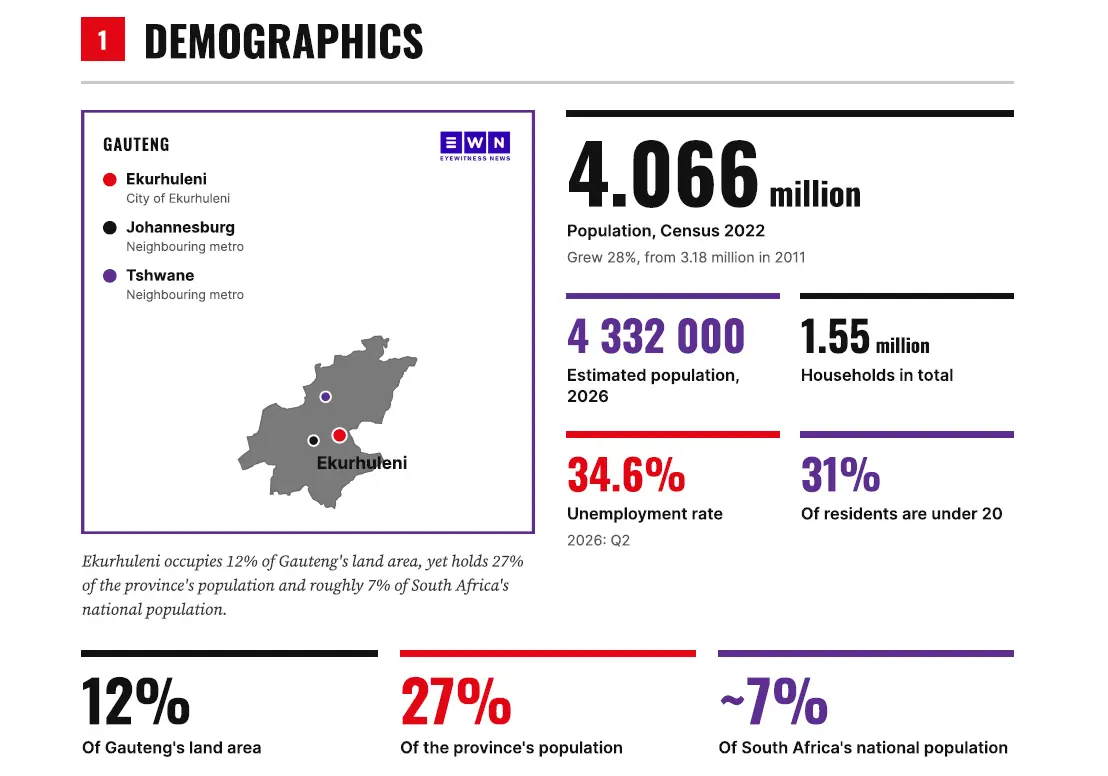
Ekurhuleni is one of Gauteng’s three metropolitan municipalities and a major industrial centre known as “Africa’s Workshop”.
Its population grew by 28% between 2011 and 2022, reaching 4.066 million, with an estimated 4.332 million residents in 2026.
The metro has approximately 1.55 million households and a young population, with 31% of residents under 20. However, unemployment stood at 34.6% in Q2 2026, while food insecurity and informal housing remain significant challenges.
Economy
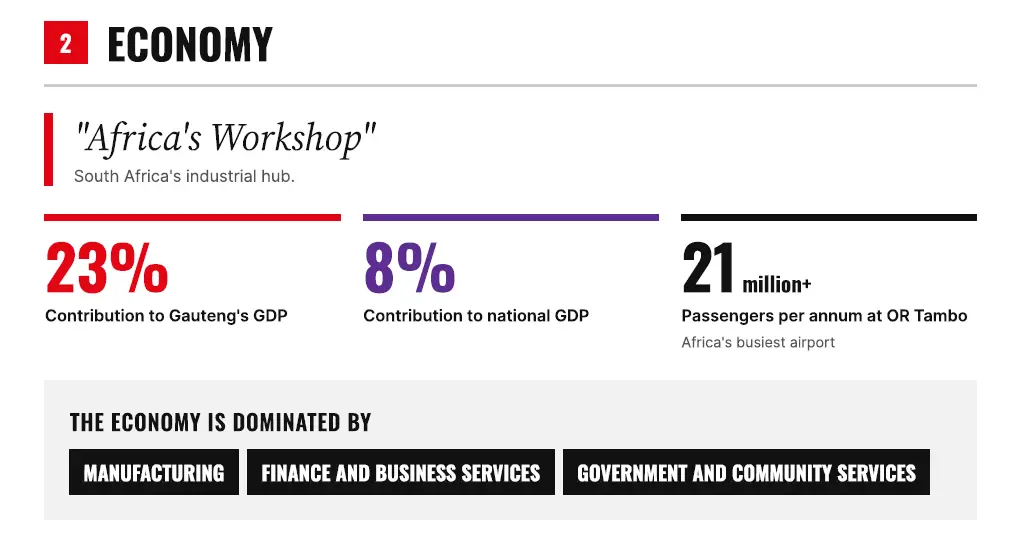
Ekurhuleni is a key contributor to South Africa’s industrial economy, generating approximately 23% of Gauteng’s GDP and 8% of national GDP.
Manufacturing, finance, business services and government services are major economic sectors.
OR Tambo International Airport, which handles more than 21 million passengers annually, further strengthens the metro’s economic importance.
Access to basic services
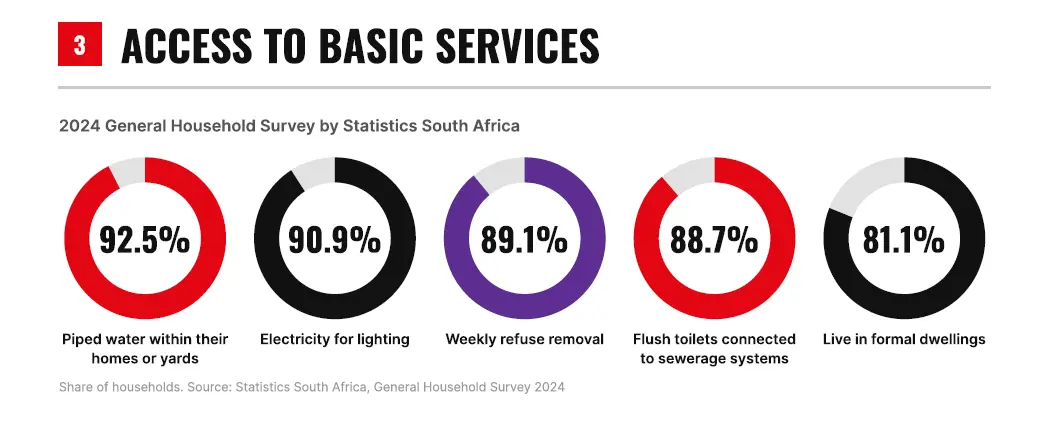
Most households have access to electricity, piped water and sanitation, although service gaps persist.
Statistics South Africa’s 2024 General Household Survey found that 92.5% of households had piped water in their homes or yards, 90.9% had electricity for lighting, 89.1% received weekly refuse removal and 88.7% had flush toilets connected to sewerage systems.
Formal housing accounted for 81.1% of households.
Auditor-General report and audit outcome
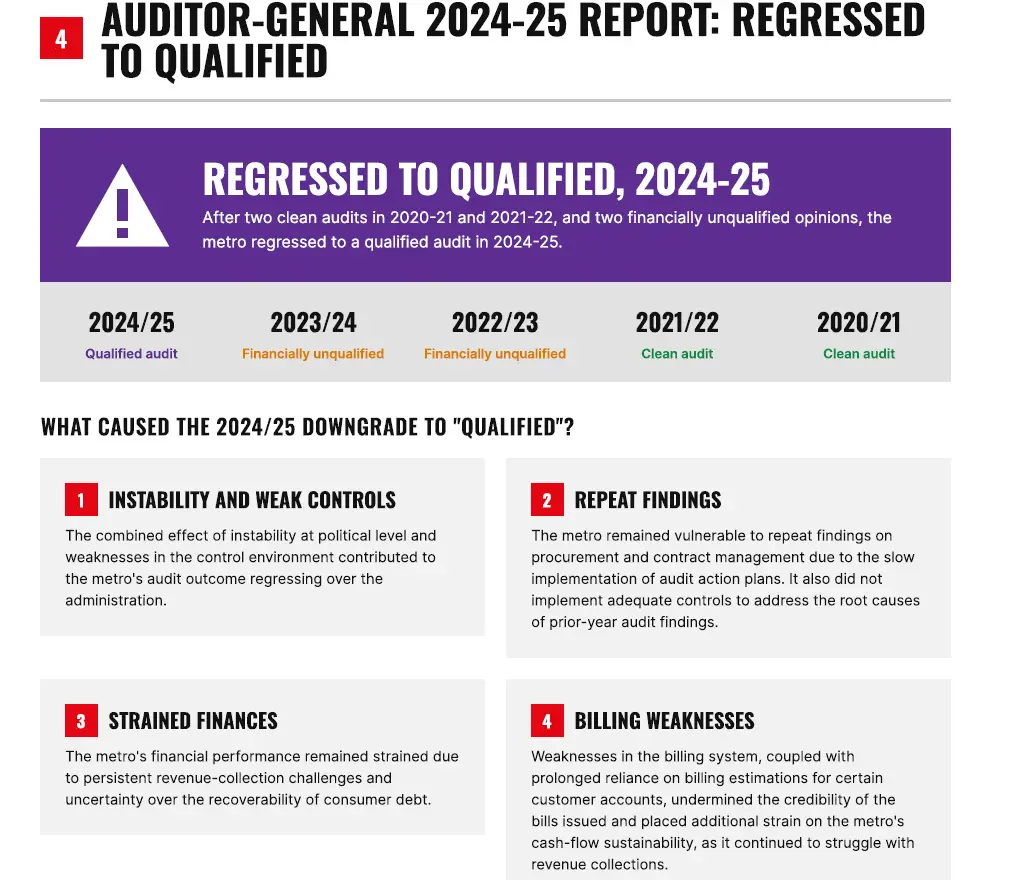
Ekurhuleni’s audit outcome regressed to a qualified audit opinion for 2024/25, reflecting weaknesses in financial controls and governance.
Political instability, procurement and contract-management problems, slow implementation of audit recommendations and unreliable billing systems contributed to the downgrade.
Persistent revenue-collection difficulties have also placed pressure on the city’s cash flow and financial sustainability.
Governance and financial health
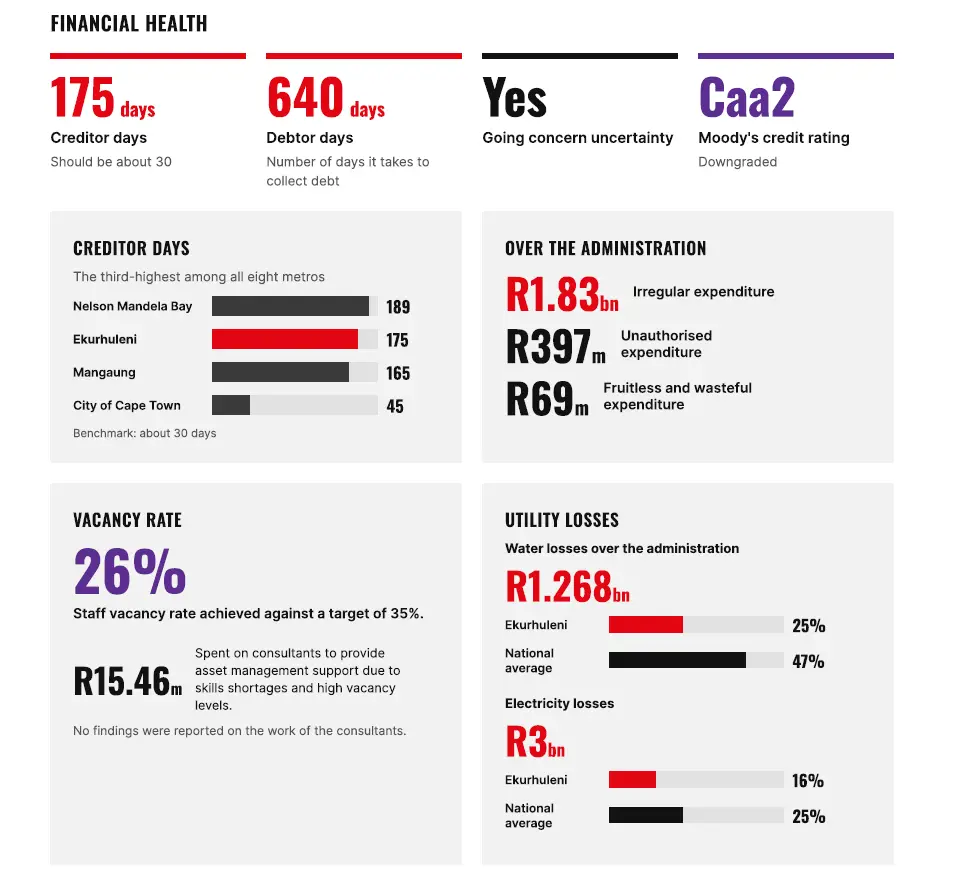
The Auditor-General warned that governance failures were worsening service delivery. Ekurhuleni faces significant financial pressure, with creditor days at 175 and debtor days at 640, indicating severe delays in paying suppliers and collecting outstanding debt.
Moody’s assigned the metro a Caa2 credit rating, and uncertainty remains about its ability to continue operating sustainably.
Reported expenditure over the administration includes R397 million in unauthorised expenditure, R1.83 billion in irregular expenditure and R69 million in fruitless and wasteful expenditure.
Water and electricity losses
Ekurhuleni recorded water losses worth approximately R1.268 billion and electricity losses of R3 billion over the administration.
Water losses were reported at 25%, compared with a national average of 47%, while electricity losses stood at 16%, against a national average of 25%.
Despite these comparatively lower loss rates, the financial value of lost utilities places additional pressure on municipal revenue.
Council and political management
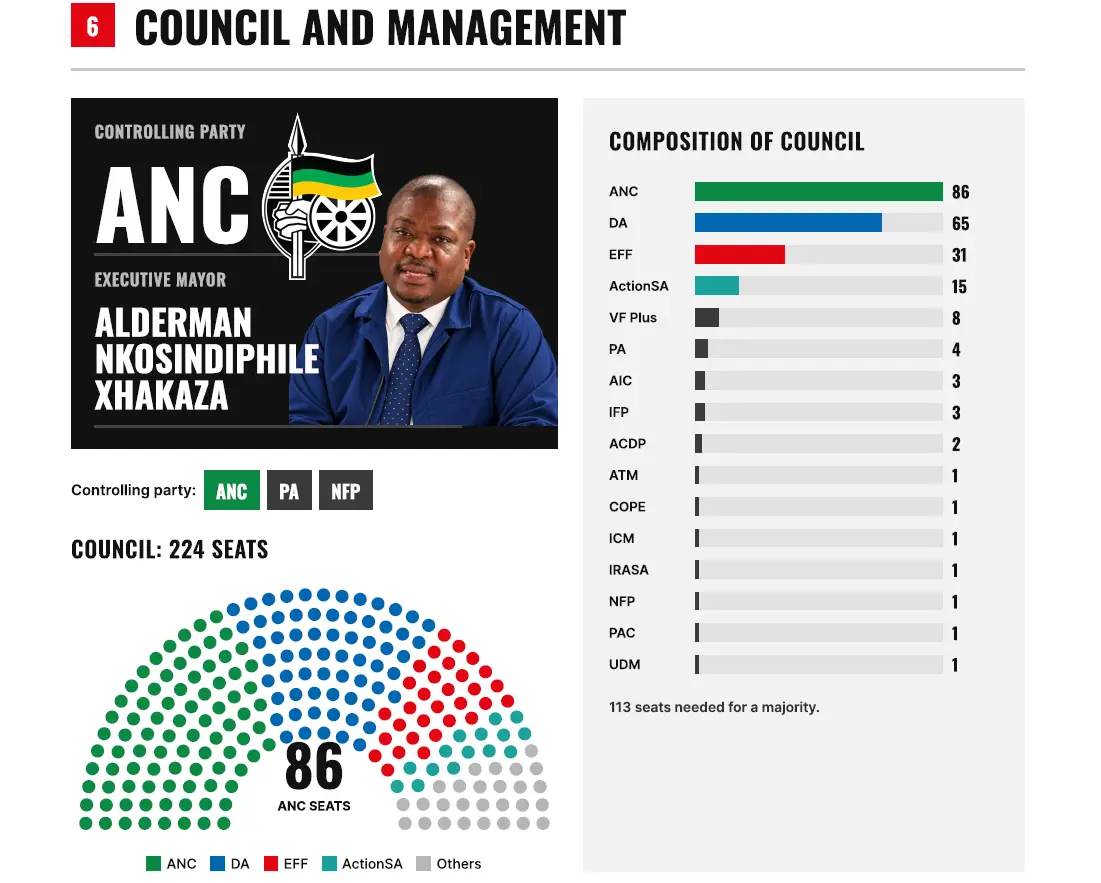
The ANC is the largest party in Ekurhuleni’s council, with 86 seats, followed by the DA with 65 and the EFF with 31.
Executive Mayor Nkosindiphile Xhakaza represents the ANC, which governs in coalition with the Patriotic Alliance and the NFP. Since the November 2021 elections, the metro has had four mayors and two speakers, reflecting considerable political instability that has affected council oversight and governance.
Previous election results
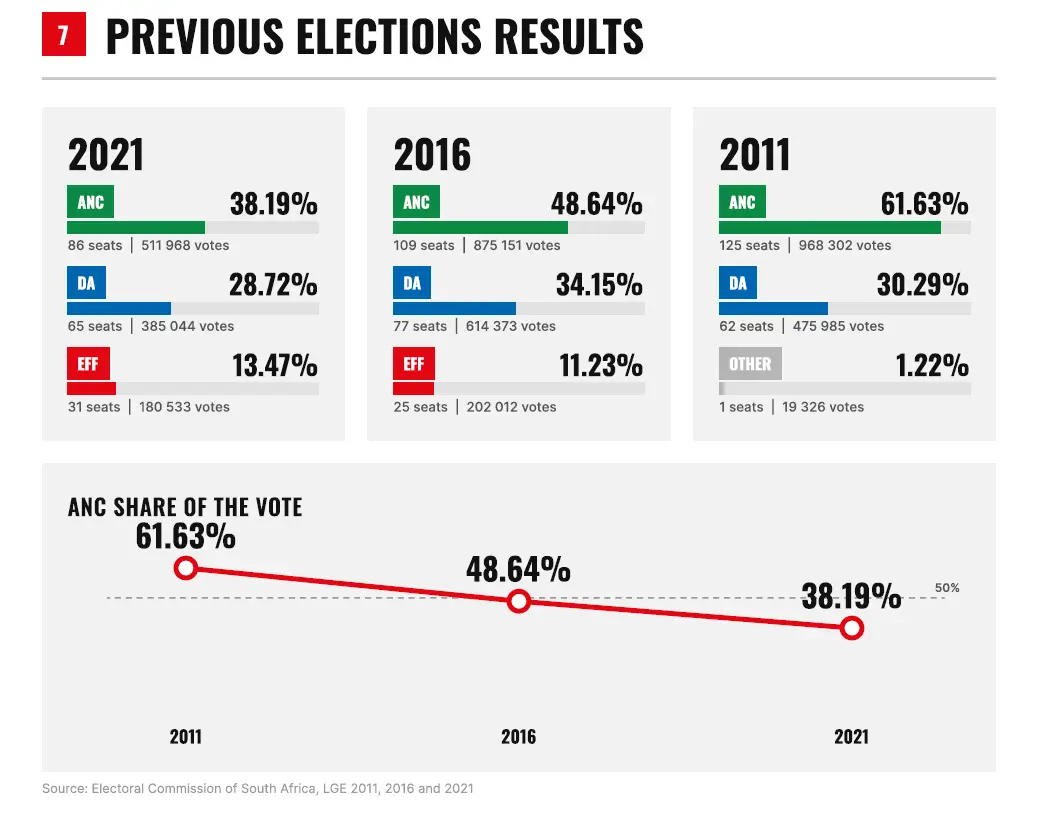
The supplied material does not include the detailed results for the 2011, 2016 and 2021 elections. However, the current council composition demonstrates that no single party holds an outright majority, making coalition arrangements important to the metro’s political leadership and administration.
Ekurhuleni is an economically significant industrial metro with a young, growing population and relatively broad access to basic services.
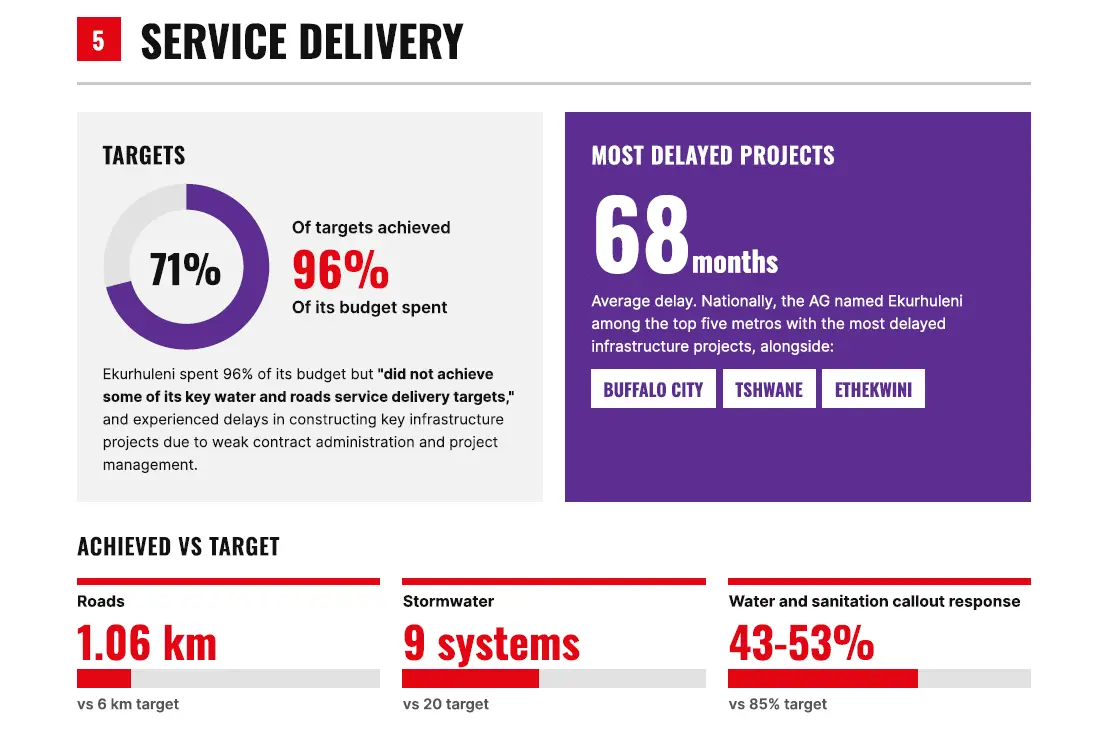
However, it faces serious challenges involving financial sustainability, political instability, procurement oversight, infrastructure delays and service delivery.
Key issues to watch ahead of the local government elections: municipal debt, water security, road maintenance, housing delivery, corruption and accountability, and whether the city can translate its substantial budget expenditure into reliable services for residents.
ALSO READ: LGE 2026: Get to know some of your Ekurhuleni mayoral candidates