The Tshwane Metro Water Crisis: A Municipal Failure Becomes a Constitutional Crisis
What began as a breakdown in water treatment has escalated into a public health emergency, raising fundamental questions about municipal competence, political accountability and the state's ability to uphold the constitutional rights of its citizens.
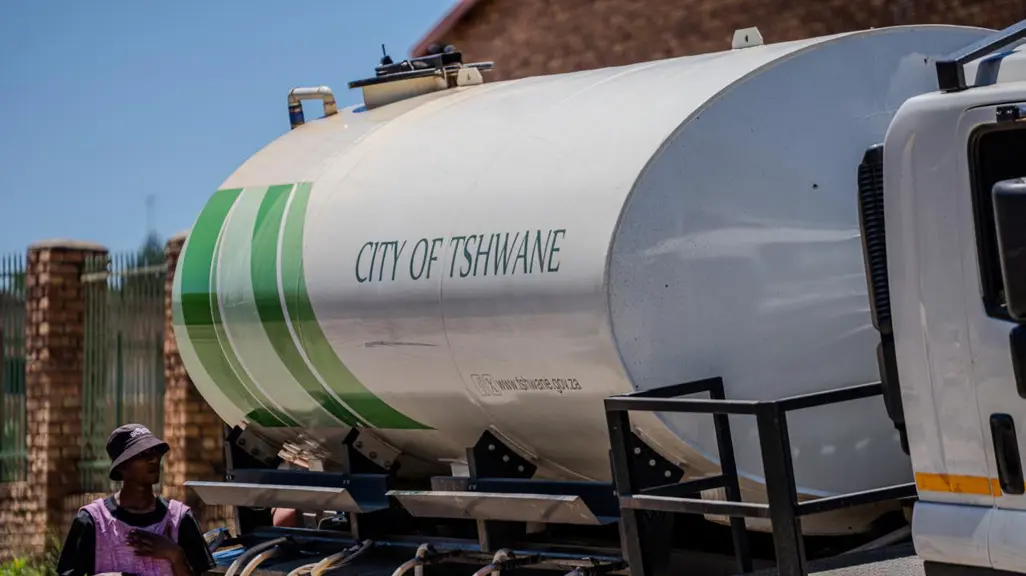
City of Tshwane water tanker
The water crisis in Bronkhorstspruit has exposed a deeper institutional failure within the City of Tshwane Metropolitan Municipality.
What began as a breakdown in water treatment has escalated into a public health emergency, raising fundamental questions about municipal competence, political accountability and the state's ability to uphold the constitutional rights of its citizens.
Reports indicate that at least 408 people suffered gastrointestinal illnesses after contaminated water was supplied to communities in the Bronkhorstspruit area.
The Department of Water and Sanitation's investigation identified a failure to chlorinate the water, linked to problems with the municipality's chlorine supply, alongside deficiencies in the treatment plant's operations.
Particularly troubling is the reported failure to warn residents promptly that their water was unsafe.
This is not simply a technical malfunction. It is a failure of municipal governance.
A metropolitan municipality entrusted with managing essential infrastructure should have systems to ensure that water-treatment chemicals remain available, equipment is maintained, water quality is monitored, and residents are alerted immediately when their health is at risk.
When these safeguards fail simultaneously, the problem extends beyond operational incompetence to institutional accountability.
The purpose of local government is not merely to administer municipal boundaries, collect revenue or manage political coalitions.
Municipalities exist to provide sustainable services, maintain infrastructure and improve the social and economic conditions of the communities they serve.
The City of Tshwane's difficulties in Bronkhorstspruit therefore raise a fundamental question: what does municipal government mean when residents cannot trust the water coming out of their taps?
The consequences reach far beyond individual households. Clinics depend on reliable water supplies to maintain hygiene and provide safe healthcare.
Schools require functioning sanitation facilities to protect learners and sustain teaching and learning. Businesses need dependable water to operate, protect workers, and serve customers.
When water becomes unsafe, the entire local economy is exposed to disruption.
For learners preparing for their matric examinations, school closures or shortened hours caused by inadequate sanitation can further undermine access to learning.
Families must find alternative sources of water, businesses face additional costs, and healthcare facilities must respond to preventable illnesses.
The costs of municipal failure are ultimately transferred to residents who have already paid for public services through taxes and municipal accounts.
This crisis also exposes the danger of treating essential services as routine administrative functions rather than critical public-health responsibilities.
Chlorine procurement, equipment maintenance and water-quality monitoring are not optional tasks. They are fundamental safeguards against disease.
Bronkhorstspruit is not the first community in Tshwane to experience a serious water-related crisis.
In 2023, the cholera outbreak in Hammanskraal exposed the consequences of dysfunctional water and wastewater infrastructure, including the failures associated with the Rooiwal Wastewater Treatment Plant. The outbreak resulted in deaths and intensified scrutiny of infrastructure maintenance, procurement and municipal accountability.
The recurrence of water-related emergencies raises questions about what the metro has learnt from previous failures. Infrastructure deterioration rarely occurs overnight.
It reflects decisions about maintenance, capital investment, operational capacity and the management of public resources over time.
The relevant question is therefore not simply how the Bronkhorstspruit treatment plant failed, but why the municipality's safeguards were insufficient to prevent the failure from becoming a public-health emergency.
If previous crises exposed weaknesses in infrastructure and administration, residents are entitled to know what corrective measures were implemented and why they proved inadequate.
Municipal expenditure must also be evaluated against its outcomes. Allocating money to infrastructure upgrades is not the same as delivering reliable services.
The test of public investment is whether treatment plants function, water meets safety standards, and communities receive an uninterrupted supply of potable water.
The crisis also reflects the broader deterioration of municipal governance in South Africa. Three decades after the democratic transition, many municipalities continue to struggle with deteriorating infrastructure, weak administrative capacity, procurement failures and political instability.
The African National Congress, having governed Tshwane for substantial periods since 1994, cannot escape scrutiny over the consequences of its leadership and the wider governance culture that developed under its tenure.
Yet accountability must be specific. The conduct of individual political office-bearers, municipal managers, procurement officials and contractors must be examined against the evidence rather than assumed from party affiliation.
South Africa's wider corruption investigations, including proceedings before the Madlanga Commission, have reinforced the importance of confronting allegations of political interference, illegal instructions and criminal networks.
However, any suggestion that organised criminal interests deliberately caused the Bronkhorstspruit crisis requires independent evidence. What is already clear is that weaknesses in essential-service delivery demand urgent investigation and accountability.
The political economy of emergency water provision also warrants scrutiny. Water tankers can provide necessary relief during disruptions, but they cannot become a substitute for sustainable infrastructure.
Public expenditure on emergency supply should be transparent, contracts properly scrutinised and temporary interventions accompanied by credible plans to restore permanent services.
The significance of the Tshwane crisis extends beyond municipal administration because access to water is constitutionally protected.
Section 27 of the Constitution recognises the right of everyone to have access to sufficient water, while section 24 protects the right to an environment that is not harmful to health or well-being.
These provisions do not mean that every service interruption automatically constitutes a constitutional violation. They do, however, establish obligations that require government to take reasonable measures to secure access to water and protect public health. The reported supply of contaminated water without timely public warnings raises serious questions about whether the municipality fulfilled those responsibilities.
With the local government elections scheduled for 4 November 2026, Tshwane's performance should be central to the debate about political leadership. But electoral competition must not reduce a public-health emergency to campaign material. Residents need more than apologies and promises: they need independently verified water-quality results, transparent explanations of procurement failures, clear repair timelines and consequences where negligence is established.
The metro must explain how its chlorine supply failed, why residents were not warned promptly, what measures have been taken to restore safe water, and how similar failures will be prevented.
Provincial and national authorities must also demonstrate that oversight mechanisms can intervene effectively when municipal systems place public health at risk.
Tshwane is South Africa's administrative capital. Its inability to guarantee the safe management of a basic municipal service damages public confidence in local government and raises uncomfortable questions about the country's institutional capacity.
Ultimately, the water crisis is a test of whether municipal government still understands its fundamental purpose.
A municipality that cannot reliably protect residents from contaminated water has failed at one of its most essential responsibilities.
The constitutional crisis emerges when that failure threatens protected rights, and the institutions responsible for enforcing accountability appear unable to prevent its recurrence.
The people of Bronkhorstspruit should not have to wait for another election, another investigation, or another outbreak before their municipality fulfils its basic obligations.
Safe water is not a political favour. It is an essential public service and a constitutional imperative.
Never miss a major story. Get breaking news and the latest developments from South Africa and beyond as they happen.