Staggering LGE 2026 numbers: More than 500 parties, 137k candidates
Nearly 29.2 million South Africans are registered to vote, but turnout is falling. Political analyst Melanie Verwoerd unpacks the numbers behind the local government elections.
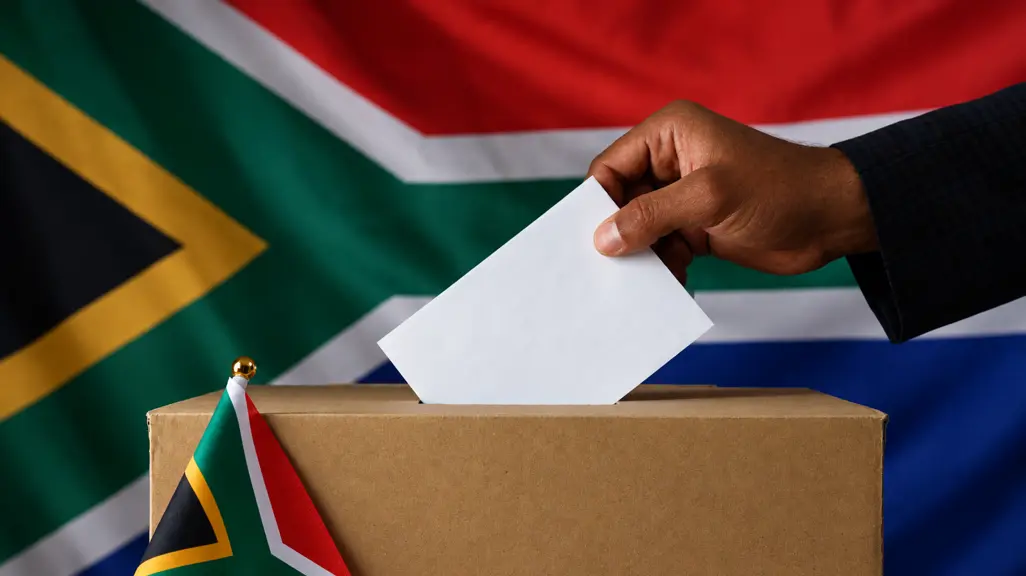
A voter casts a ballot against the backdrop of the South African flag ahead of the 2026 local government elections, as 546 political parties and nearly 137,000 candidates contest seats across the country. (Picture credit: atlasfoto/123rf)
South Africa's upcoming local government elections will see 546 political parties contesting the polls, with almost 137,000 candidates vying for just over 10,500 council seats.
But while the numbers point to an election on a massive scale, declining voter turnout, low youth participation and growing mistrust in the Electoral Commission of South Africa (IEC) raise questions about the state of the country's democratic process.
Political analyst Melanie Verwoerd discussed the figures during a CapeTalk interview on an election education segment, highlighting the challenges facing political parties as they seek to mobilise voters.
Recently published related articles:
— Helen Zille faces tough coalition choices, says William Gumede
— ANC sets sights on taking Cape Town back from DA after 20 years
Nearly 29.2 million registered voters
South Africa's voters' roll has grown by about three million since the previous local government elections in 2021, bringing the total to approximately 29.2 million registered voters, according to Verwoerd.
The Western Cape has around 3.5 million registered voters, compared with almost 6.75 million in Gauteng. About two million of the Western Cape's registered voters are in the province's metro, accounting for approximately 62% of its total.
At the other end of the scale, the Western Cape municipality with the smallest number of registered voters is Laingsburg, with just over 5,000.
However, the number of people registered to vote does not necessarily translate into the number who will cast their ballots.
Turnout continues to decline
Voter turnout has been falling since South Africa's first democratic election in 1994, with participation in the 2021 local government elections dropping to 45% of registered voters.
Verwoerd said the picture is even more concerning when the figures are considered against the country's total eligible voting population.
On that basis, only about three in every 10 eligible adults voted in the previous local elections.
Low turnout matters because elections allow citizens to express their needs, preferences and frustrations with government. If participation falls too far, Verwoerd warned, it raises questions about the legitimacy of the democratic process.
Although staying away from the polls can itself be an expression of dissatisfaction, the declining numbers remain a concern.
Young voters are missing from the picture
Young South Africans are a particular concern, with registration and turnout among younger age groups remaining low.
In the Western Cape, fewer than 59,000 people aged 18 to 19 had registered to vote, while approximately 400,000 people aged between 20 and 29 were on the voters' roll.
By comparison, around 100,000 people aged 80 and older were registered in the province.
Verwoerd said the low numbers among younger voters were compounded by the fact that proportionally fewer of those who register in the 20-to-29 age group actually turn out to vote.
She also pointed to survey findings indicating that many young people do not feel represented by any political party.
Political parties have increasingly tried to reach younger voters through social media and by speaking about youth issues. However, Verwoerd said they have struggled to turn those efforts into meaningful participation at the polls.
Low youth turnout can also affect parties differently. Verwoerd said the EFF and MK could be disproportionately disadvantaged if younger voters stay away, while the ANC could be affected by low participation among its rural voter base.
Growing mistrust in the IEC
Another concern raised during the interview was a reported increase in public mistrust of the IEC.
Verwoerd referred to a recent Ipsos study indicating that about 40% of people nationally either did not trust the commission or had concerns about it. Around 60% still expressed trust.
In KwaZulu-Natal, the proportion of respondents who said they did not trust the IEC was reportedly 58%.
Verwoerd said the findings were concerning, particularly in a province where political violence has been a recurring issue.
She warned that disputes over election results could become more serious if major political parties questioned the legitimacy of the process.
The IEC has been one of the institutions associated with the successful administration of South Africa's elections since 1994, she said, making the apparent erosion of public trust an issue that needs to be addressed.
Women make up the majority of registered voters
The gender breakdown of the voters' roll is another significant feature of South Africa's electorate.
According to Verwoerd, women account for just over 55% of registered voters, compared with approximately 44% for men. Women also tend to turn out in greater numbers on election day.
In recent elections, women have accounted for about 57% of those who voted.
Verwoerd argued that political parties could benefit from paying closer attention to issues that affect women, particularly at local government level.
However, she said she had not seen parties do this to a significant extent.
Hundreds of parties and thousands of candidates
The scale of the contest is reflected in the number of parties and candidates taking part.
According to Verwoerd, 546 parties have registered candidates for the local government elections, around 60% more than in the previous local elections.
Almost 137,000 candidates are contesting just over 10,500 seats, amounting to approximately 13 candidates for every seat.
Johannesburg has the largest number of parties contesting, with 75; Cape Town has 55 parties contesting, Verwoerd said.
The figures underline the range of choices facing voters, but also the challenge of identifying candidates and understanding what they stand for.
Voters urged to look beyond party names
Verwoerd urged voters to research both their ward candidates and the parties they intend to support.
She said voters should consider whether candidates have demonstrated a commitment to their communities and whether they are likely to be responsive to residents' concerns.
Simply voting for someone because they belong to a particular party, she argued, risks overlooking the importance of the individual who will represent a ward.
With so many candidates contesting the elections, voters face a significant task in deciding who should run their municipalities for the next five years.
For Verwoerd, the figures are a reminder that the scale of an election means little if citizens do not participate in it, and that choosing representatives requires more than simply turning up at the polls.
Never miss a major story. Get breaking news and the latest developments from South Africa and beyond as they happen.