Durban port backlog highlights cost of logistics disruption
Disruptions are adding costs for importers, exporters and other businesses, with government pushing for a clear plan to clear the backlog.
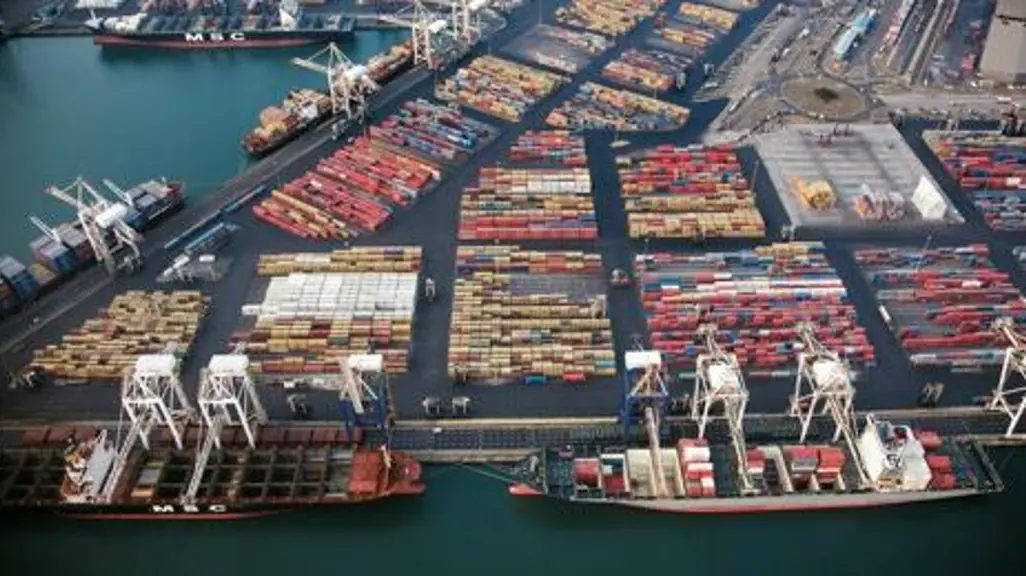
Durban container port. Wikimedia Commons/Media Club
Stephen Grootes speaks to Transport Minister Barbara Creecy about the worsening delays at the Durban Gateway Terminal, where vessel waiting times have nearly doubled since ICTSI took over operations.
Listen to the interview in the audio player below.
Transport Minister Barbara Creecy is under pressure to address worsening delays at Durban Gateway Terminal, where vessel waiting times have nearly doubled since ICTSI took over operations.
The terminal, which handles about 46% of South Africa’s container traffic, has been hit by disruptions following the introduction of the Navis N4 operating system.
Filipino operator took over the operation of the pier on a 25-year contract with demands that they would improve the way the port has been operating.
But ongoing disruptions are adding costs for importers, exporters and other businesses, with government pushing for a clear plan to clear the backlog.
Speaking to Stephen Grootes on The Money Show, Creecy says average waiting times have improved to about 8.3 days, but remain far above the 24-hour target.
"The consequence of the changeover was a backlog, and then we had very bad weather in August that intensified the backlog. And I don't yet have September's figures, but I imagine, given the frustration of the freight forwarders, that the matrices are still moving in the wrong direction."
- Barbara Creecy, Transport minister
"...we have to resolve these teething problems and we have to resolve them soon. The first six months with ICTSI were good. We were 21% above target. So there doesn't seem to have been an inherent problem."
- Barbara Creecy, Transport minister
Meanwhile, government is considering a new funding model for the financially distressed Road Accident Fund, potentially reducing or scrapping its reliance on the fuel levy.
Options under consideration include a hybrid funding model, third-party insurance and contributions linked to vehicle ownership.
The changes come as government seeks to reduce pressure on motorists while finding a more sustainable funding base for the RAF.
For businesses and consumers, both developments highlight the growing financial cost of inefficiencies in South Africa’s transport and logistics system.
With fuel prices set to rise again and reach record levels in South Africa, it puts further strain on the existing model.
Creecy says reducing road accidents needs to be the main priority.
"We have been working hard on reducing road accidents. We do want to introduce a defined schedule of benefits and some kind of a no-fault system. And that, of course, is to make sure that we reduce the demand for compensation for accident victims."
- Barbara Creecy, Transport minister
Scroll to the top of the article to listen to the full interview.