Carrying the ancestral drum: How heritage shapes Nomfusi's global sound
Her trial by fire in Cape Town's venues led to the release of her 2009 debut album, 'Kwazibani'.

Nomfusi Gotyana, known mononymously as Nomfusi, is a South African singer and Afro-soul performer. Picture: Standard Bank Joy Of Jazz
Before she ever stood on an international stage, Nomfusi Gotyana was a five-year-old child listening to the pulse of a traditional drum. Raised in the Eastern Cape, she first heard music through her mother, a sangoma (traditional healer).
"I was exposed to the traditional music and traditional songs at a very young age," Nomfusi said to Eyewitness News. "I would be that child who is called to play the drum first and also dance and sing along."
That early foundation in traditional rhythms, hymns and mouth percussion shaped her artistic soul. But her journey from a township shack to the global spotlight was paved with immense hardship. After losing her mother at a young age, Nomfusi moved to Cape Town to study at the Cape Peninsula University of Technology. To survive, she took a job balancing food trays and stage microphones.
"I had to be a waitress and a performer. I obviously sucked at being a waitress," she chuckled.
So then, my performances on stage always gained me favour and the audience loving me and even forgiving me for all the mistakes that I would do on the tables."
Her trial by fire in Cape Town's venues led to the release of her 2009 debut album, Kwazibani. Born from the raw reality of township life, the music tackled deep social issues like poverty. Yet even in her hardest moments, Nomfusi carried her mother's fierce ambition.
"The most dangerous part of poverty is when they capture your mind," she says. "Yes, you can lack basics- food, shelter, clothing- but do not allow your mind to also be in poverty... My mom had such an ambitious mindset that gave me the belief: I'm not meant to end here. This is not the end of my story."
READ MORE:
The calling of Khaya Mahlangu: How a Soweto boy became a jazz icon
'Why can't I just be Ziza? How Zagreb-born Ziza Muftic found her voice in South African jazz
'I approach music just like prose and poetry,' says songster Internet Athi
Why Gurulogic left a 15-year engineering career for his first love: Music
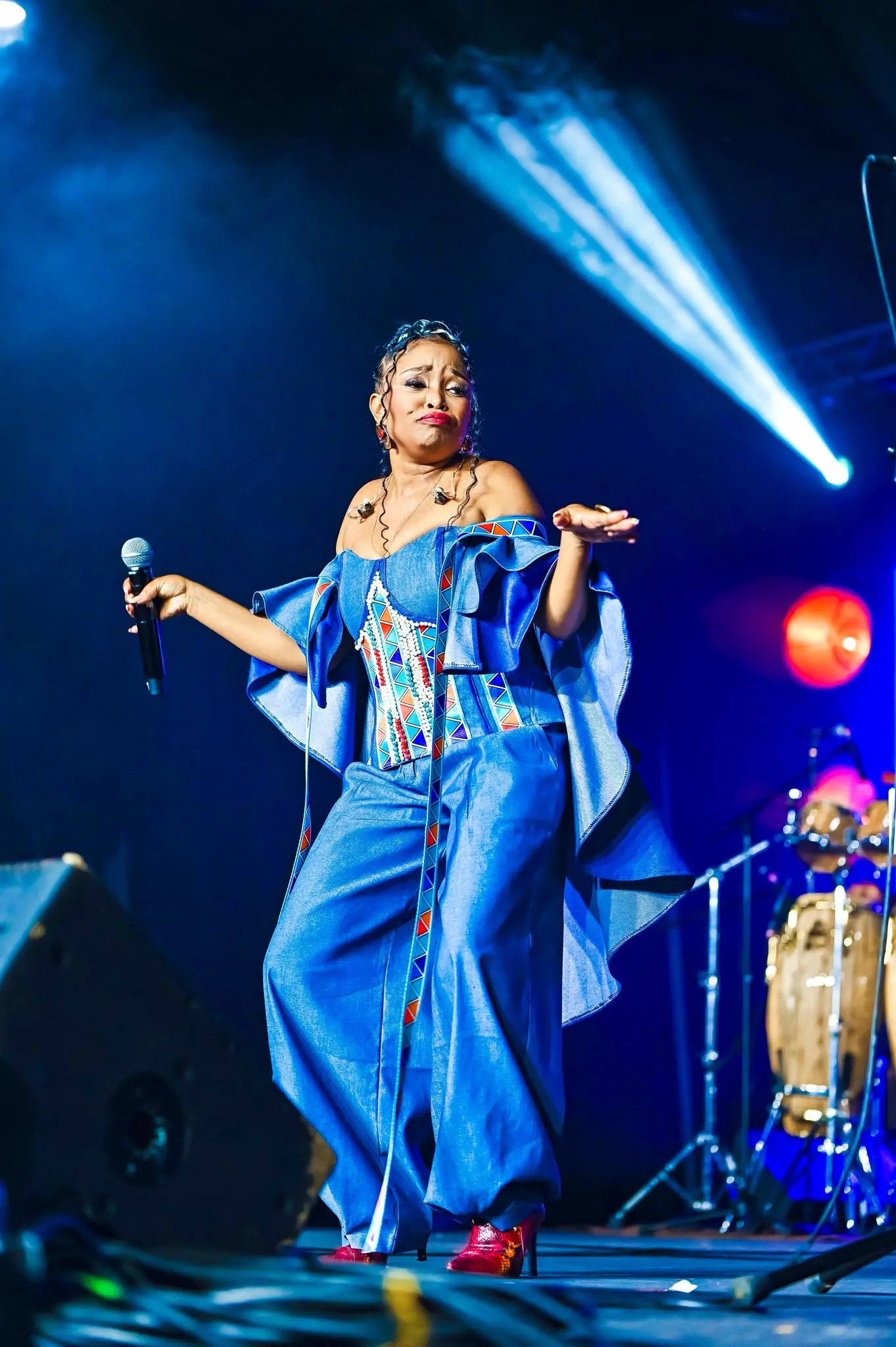
That resilience carried her onto global stages, where her signature sound-a vibrant fusion of Sophiatown jazz, 1960s Afro-soul, reggae and traditional Xhosa rhythms- captivated audiences worldwide. Growing up in a shack, she recalls how music from every direction filtered through the walls: Lucky Dube from one corner, gospel icon Rebecca Malope from another and Whitney Houston from down the street.
Her authentic presence caught the attention of filmmakers, earning her the historic role of a young Miriam Makeba in the film Mandela: Long Walk to Freedom. Embodying "Mama Africa" changed how Nomfusi viewed her own craft.
"Miriam was Miriam," Nomfusi explains.
"She came with language. She came with her history. She came with her clicks...and she was accepted. That has literally been a part of my journey- that I'm going to stay authentic to where I come from."
That devotion to authenticity allowed her to hold her own alongside world-renowned legends including Angelique Kidjo, Hugh Masekela and Lionel Richie. Sharing stages with these icons taught her the most vital lesson of live performance: the power of finding one's own unique voice rather than imitating others.
"There's nobody who sounds like Bra Hugh," she says. "It is so important to find your own voice and be you... rather fine-tune you than try to be somebody else."
Today, whether she is performing in Gqeberha or at international festivals in Canada, Nomfusi brings her full history to the stage. Her live shows are a journey, starting with soulful storytelling and slow-building rhythms that inevitably get the whole audience up and dancing. Through it all, she remains deeply rooted in her culture, carrying her mother's drums and the spirit of the township wherever she goes.