‘This should be happening every day’: Municipal basics shouldn’t need presidential orders, says SAPOA
President Cyril Ramaphosa has ordered municipalities to identify public spaces that could put women at risk.
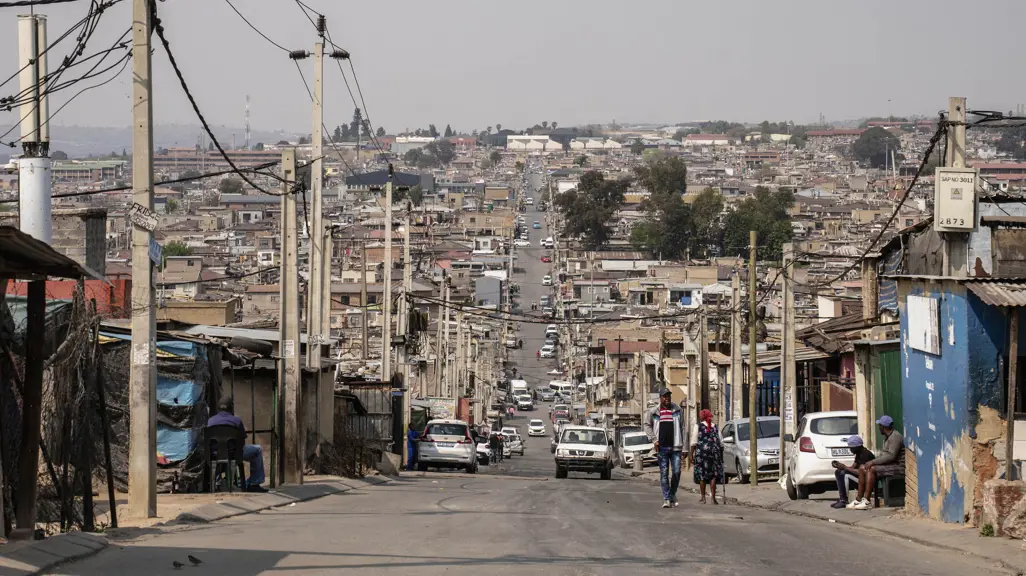
A general view of a street in Alexandra township, in Johannesburg, South Africa, August 27, 2025. Picture: OUR CITY NEWS/Ihsaan Haffejee.
Fixing broken streetlights, clearing overgrown spaces and maintaining public infrastructure.
President Cyril Ramaphosa this week ordered every municipality to conduct a women’s safety audit as part of the government’s response to gender-based violence (GBV).
Municipalities have 60 days to identify risks such as broken streetlights, abandoned buildings, unsafe transport routes and poorly secured parks.
The most urgent problems must then be addressed within 90 days.
But while the president’s directive is a step in the right direction, it also highlights a deeper problem, the South African Property Owners Association (SAPOA) says.
“What the president is requesting is commendable. But ... it is basic stuff that should effectively be happening every day,” SAPOA president Itumeleng Mothibeli said.
Speaking to CapeTalk’s Lester Kiewit, Mothibeli said municipalities were battling systemic challenges involving staffing, budgets and the ability to deliver basic services.
“We represent about 90% of all commercial property owners nationwide. And throughout kind of the 257 municipalities that we operate in, only 15% of those municipalities have unqualified audits with no findings.”
Meanwhile, commercial property owners were increasingly spending their own money to keep buildings functioning, he said, while also facing rising rates and taxes.
“The challenge that we face is that over and above the fact that property owners are taking all of these challenges and they’re trying to fix for them, the rates and taxes are growing at levels significantly higher than inflation.”
ALSO READ:
Mothibeli said the private sector could offer skills and expertise to struggling municipalities, but should not take over their responsibilities.
“We’re not government. That’s not our role. Our role is not to govern.”
Instead, he said businesses could help identify expertise and support municipalities where needed.
“We can drill and find gold four kilometres beneath the earth, but we can’t get water to run out of taps. So the skill set is there.”
Ultimately, Mothibeli said, municipalities remained responsible for governing and delivering the services communities need.
Never miss a major story. Get breaking news and the latest developments from South Africa and beyond as they happen.