US midterms unlikely to shift Washington’s approach to SA, says political scientist
According to Professor Henry Brady, a Democratic victory in either chamber of Congress is unlikely to bring a major change to Washington’s approach to South Africa.
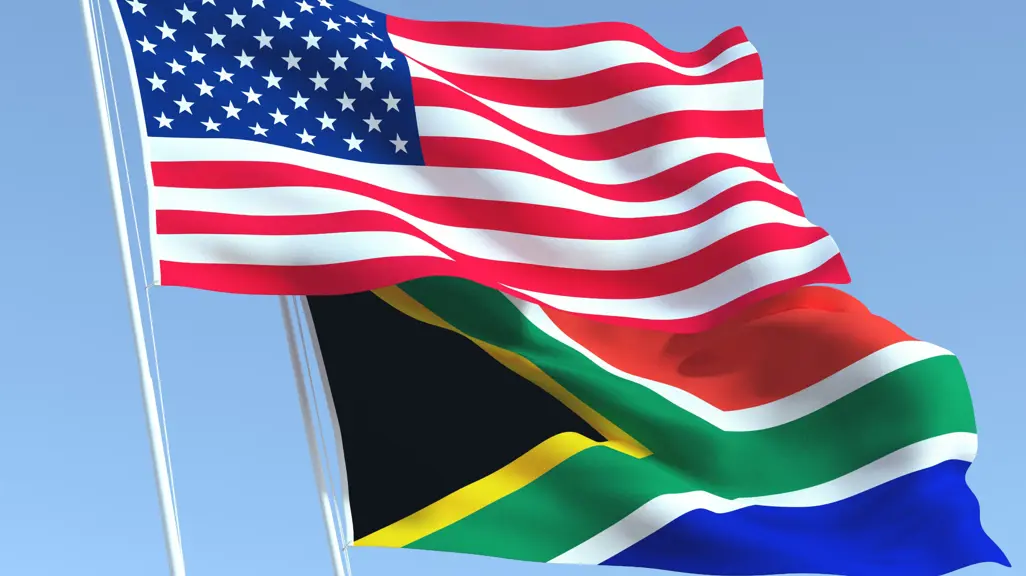
United States and South Africa flags. Picture: 123rf.com
Voters in the United States will head to the polls on 3 November for the country’s midterm elections.
Questions have been raised about whether a swing toward the Democratic Party could benefit South Africa, particularly as President Donald Trump’s administration has implemented several policies through executive orders.
ALSO READ: Lamola takes aim at Trump's Afrikaner policy as US tensions deepen
According to Professor Henry Brady, Class of 1941 Monroe Deutsch Professor of Political Science and Public Policy at the University of California, Berkeley, a Democratic victory in either chamber of Congress is unlikely to bring a major change to Washington’s approach to South Africa.
Brady said Democrats could use congressional powers like holding hearings and controlling spending, but Trump would still retain significant authority.
"Well, they're not going to have that much power. They will have the power in the House, let's say they get that, to subpoena and hold hearings and also the power of the purse. But of course, Donald Trump retains the veto, and he also retains what's increasingly become called the unitary executive, which means, at least by his reading of it, that he can pretty much do whatever he wants. So that includes ignoring what Congress tells him to do.
"If it's just the House without the Senate, then it's going to be especially difficult for Democrats to have much power to do anything. If they also have the Senate, then they could at least pass legislation, but that might face the veto and be ignored even by the president, which leads us to the courts, which leads to all sorts of other complications.
"Unfortunately, by the way, I think that South Africa is going to be way down the list of the things the Democrats have to focus on, given that there's so many things that they have to deal with."
ALSO READ: Beyond midterms, Republicans ponder who comes after Trump
Brady added that Congress could scrutinise the Trump administration’s policy toward South Africa, particularly its focus on Afrikaner refugees, which he described as a significant departure from previous policy.
The Trump administration’s February 2025 executive order prioritised refugee resettlement for Afrikaners it described as victims of racial discrimination in South Africa.
However, Brady doubted Congress could reverse the approach.
Brady said even significant Democratic gains in the midterm elections should not necessarily be seen by Pretoria as a reset in relations.
"I think it's unlikely that the House, especially alone, but even with the Senate, could do very much in that regard.
"...trying to set particular quotas for particular places with respect to immigration and particular types of people, there may be a hearing on that because there has been sort of an egregious change in policy towards South Africa with a focus on white Afrikaaners, and that's certainly a departure from the past.
"So, there might be some hearing that talks about that, but whether there's an actual effort by Congress to try to reverse that is another matter. It's not clear to me that it could really succeed."
He believes meaningful change would more likely depend on the next presidential election.
Never miss a major story. Get breaking news and the latest developments from South Africa and beyond as they happen.