Ramaphosa impeachment inquiry stalls as parties clash over process
Parliament’s Impeachment Committee is limping along in trying to establish the parameters for the inquiry that has been faced with another legal curveball.
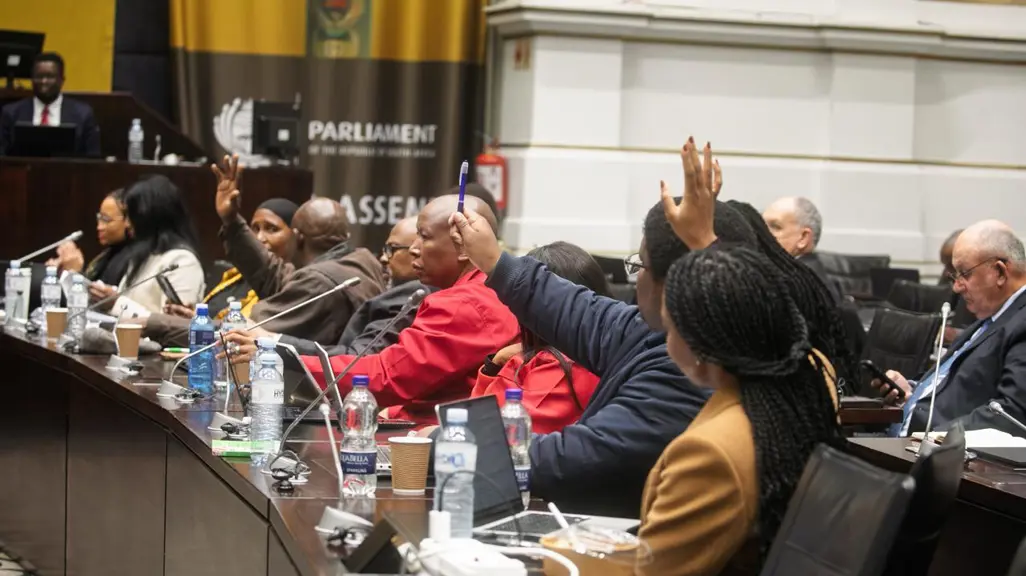
Parliament's Impeachment Committee meeting on 24 June 2026. Picture: Zwelethemba Kostile/Parliament
Three months after its creation, Parliament’s Impeachment Committee still hasn't finalised the rules for investigating misconduct charges against President Cyril Ramaphosa.
The African National Congress (ANC) is insisting that the draft be subjected to public scrutiny and that the committee consider its two-stage proposal to determine whether Ramaphosa should be subjected to a full-blown inquiry.
ALSO READ:
Impeachment Committee holds off considering further nominations for evidence leader
Impeachment Committee facing legal challenges over rescinding evidence leader recommendation
Impeachment inquiry: Chair would rather err on side of caution in evidence leader debacle
However, opposition parties have rejected these proposals, with political parties given another two weeks to consider the draft guidelines for the inquiry into the circumstances around the theft of 580 000 US dollars from Ramaphosa’s Phala Phala farm.
Parliament’s Impeachment Committee is limping along in trying to establish the parameters for the inquiry that has been faced with another legal curveball.
It’s facing two new challenges over a decision to backtrack on its recommendation of Thandazani Madonsela as evidence leader.
In the meantime, it’s also not yet reached consensus on the terms of reference for the inquiry.
The ANC’s Cameron Dugmore has once again floated the idea of dividing the inquiry into two phases - the first to test the evidence on the Phala Phala matter, before deciding to proceed to an inquiry stage.
But this proposal has been rejected by several parties, including the African Christian Democratic Party's (ACDP) Steve Swart.
"We can’t have a two-step inquiry. We start with the inquiry; we start with the evidence leader considering the weight of the evidence in the independent panel’s report," said Swart.
The Economic Freedom Fighters (EFF) Omphile Maotwe has also dismissed the ANC’s suggestion.
"We are in one singular process that will take us from hearings all the way to a conclusion. There’s no start, midpoint and end point or a conclusion to suggest midpoint would be an intervening point for the committee," said Maotwe.
Dugmore has also pushed to increase the time for Ramaphosa to make his opening statement to the committee from two to four hours.
Meanwhile, Parliament’s legal advisors said that there’s no need for the committee’s terms of reference to be subjected to public comment as proposed by the ANC.
Never miss a major story. Get breaking news and the latest developments from South Africa and beyond as they happen.