Rabies in Cape fur seals is spreading – here’s what beachgoers need to know
Sea Search said rabies has not disappeared from Cape fur seal populations and warned swimmers, surfers and beachgoers to keep their distance.
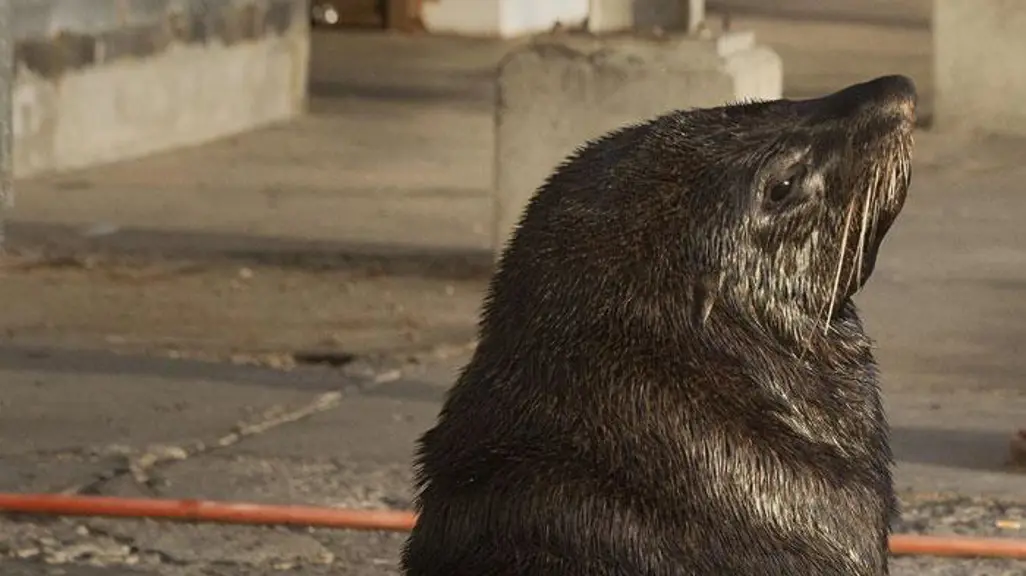
FILE: A Cape Fur Seal sunbathes on the deserted quay at Kalk Bay Harbour in Cape Town on April 14, 2020. Picture: RODGER BOSCH/AFP
A continuing and growing problem. Experts say rabies among Cape fur seals is not going away.
Speaking to CapeTalk’s John Maytham, Sea Search co-founder Dr Simon Elwen said the outbreak had 'absolutely not gone away'.
Elwen said the outbreak was unusual because rabies has previously never been known to spread widely through a marine mammal population.
He said researchers still did not know exactly how many seals were infected at any given time, with the disease likely moving through the population in waves.
"Even if it's a fraction of a percent of two million seals, it's a lot of potential seals with rabies."
ALSO READ:
NSRI issues new safety warning amid rabies increase in Cape fur seals
CapeNature warns public to keep distance from Cape fur seals amid rabies concern
WATCH: 'Unusual' seal attacks leave questions around suspicious seal behaviour
So, can one stop rabies spreading amongst a population of animals that tends to spend quite a lot of time lying on each other, asked Maytham?
“At the moment, no, is the short answer,” said Elwin.
He described seals as the 'perfect vector'' for a disease like rabies.
"If you were looking for the perfect vector for a disease like rabies, you would choose something that moves widely, is highly social, and crosses the land-sea boundary on a daily basis. And it's kind of surprising that it's actually taken this long for us to have a rabies outbreak in seals."
At least 176 people were reported to have been bitten by Cape fur seals up to the end of 2025, although Elwen said that figure was probably an underestimate.
"I think it's a very real risk and something that water users do need to be aware of, in the same way that you'd be very cautious if you met a dog you didn't know, because a seal is essentially a large, very capable swimming dog that can weigh up to 200-plus kilograms."
He said encounters with seals were most common in areas where large numbers of people and seals overlapped, including Cape Town, Mossel Bay and Plettenberg Bay.
His advice to the public was simple.
Do not approach seals.
People should be especially cautious if a seal appeared somewhere unusual or behaved strangely, as rabies could affect an animal’s navigation and behaviour.
"It might not mean anything to the average European tourist coming to South Africa to see a seal on Muizenberg Beach, but as a local person, that's quite unusual."
They've even been spotted on the highway.
"There have been a few odd cases of seals doing things like that because rabies is a disease of the brain. That's what happens as animals' navigation becomes impaired."
Elwen also warned that seals could move surprisingly quickly on land and were capable of outrunning most people over short distances.
Never miss a major story. Get breaking news and the latest developments from South Africa and beyond as they happen.