Keith Orrell's journey from rugby pitch to world para-bowls
Playing on local South African grass greens is vastly different from the fast artificial indoor carpet used at events like the Glasgow Games.

South African lawn bowls athlete Keith Orrell. Picture: Supplied.
South African lawn bowls athlete Keith Orrell has proven that determination can overcome any obstacle. His journey into competitive sports started with athletics and rugby at Westville Boys High.
However, a serious knee injury at age 22 ended his rugby career. Refusing to step away from competition, Orrell turned to lawn bowls alongside his father at Collegians.
Growing up, Orrell deeply admired his father's natural talent across various sports.
"My father in his heyday was a phenomenal sportsman," Orrell told Eyewitness News. "I loved the competitiveness my father showed... and that rubbed off on me to be competitive and to be the best, and despite disabilities, I worked extra hard to be competitive against able-bodied people."
READ MORE:
Bowls SA sends top athletes to World Bowls Indoor Championship
South Africa's Jarid James clinches bronze at Bowls World Cup
As time went on, Orrell faced challenges: progressive vision and hearing loss. Today, he can only see clearly for about two meters. Deteriorating sight and hearing caused a difficult period, making it tough to compete at his usual level. The turning point came 10 years ago when he was introduced to visually impaired bowls.
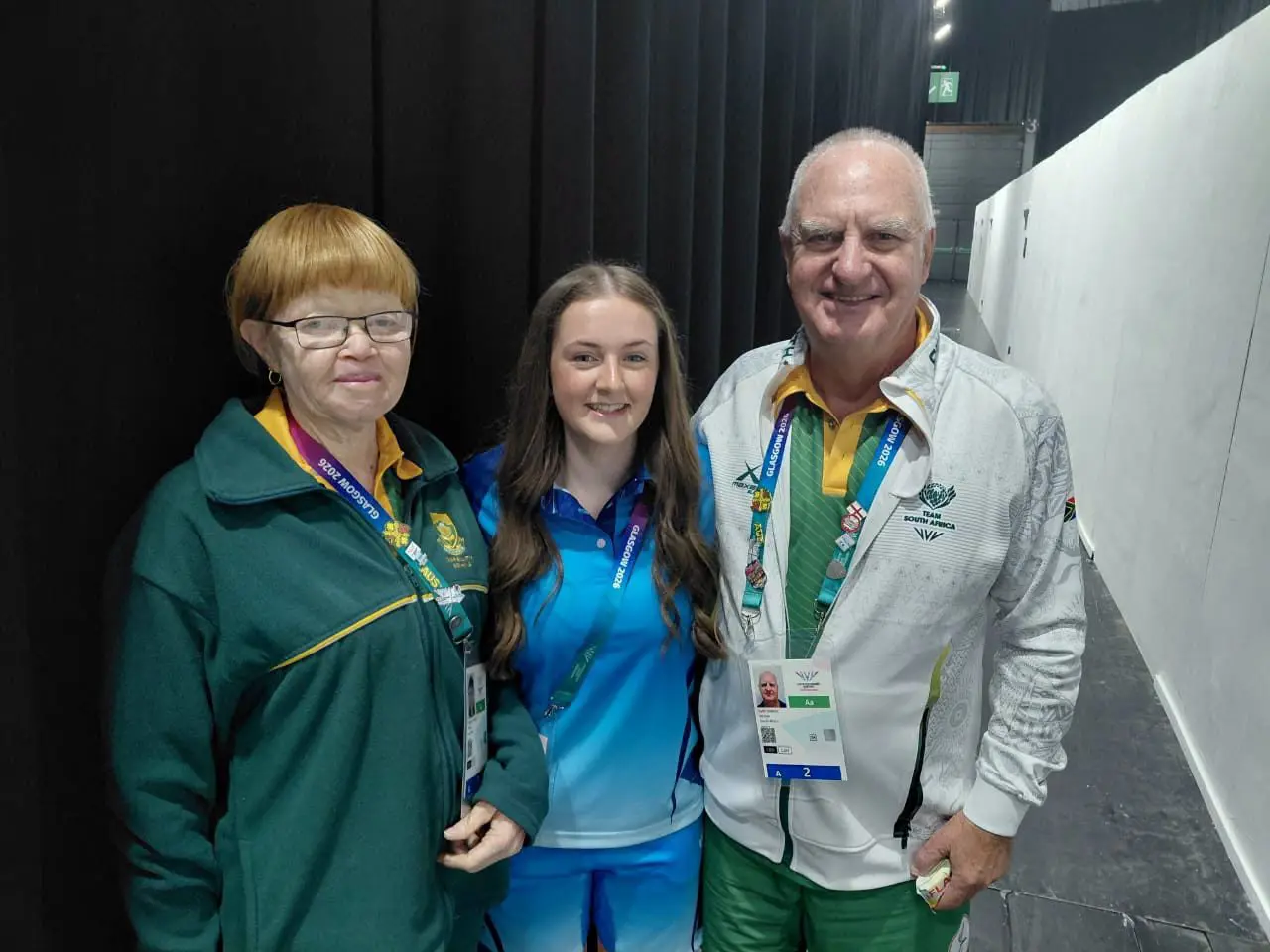
Keith Orrell and Princess Schroeder (glasse) at the 2026 Commonwealth Games. Picture: Bowls South Africa/Facebook
"Competing with people who also have impaired vision puts us on the same level playing field where I can compete against those who are in the same classifications," Orrell explained.
Starting bowls 42 years ago with 75% vision helped Orrell understand the fundamentals and map out the green. Today, playing with a double impairment requires deep mental focus, sensory cues and muscle memory.
"Because I can't see what I am playing, one has to work on one's muscle memory and feel the weight of one's delivery," said Orrell. " One must be relaxed, stay focused and visualise what you have to do."
To navigate the green, Orrell relies heavily on his director, Trevor Freeman. A former Springbok ten-pin bowler, Freeman brings high-level experience and a calm mindset to the partnership. Their trust was put to the test during the SA Nationals in a high-stakes singles game.
"My opposition was lying three shots to win the game, and I had the last bowl," Orrell recalled. "We decided to go for the draw shot and drew it right on the jack."
Fast-paced clock-face communication is critical during international events like the Commonwealth Games, where players have limited time to align and deliver their bowls. Orrell credits Freeman's quick decision-making under strict time limits: "There was no time for debate, and I had to trust Trevor with his call."
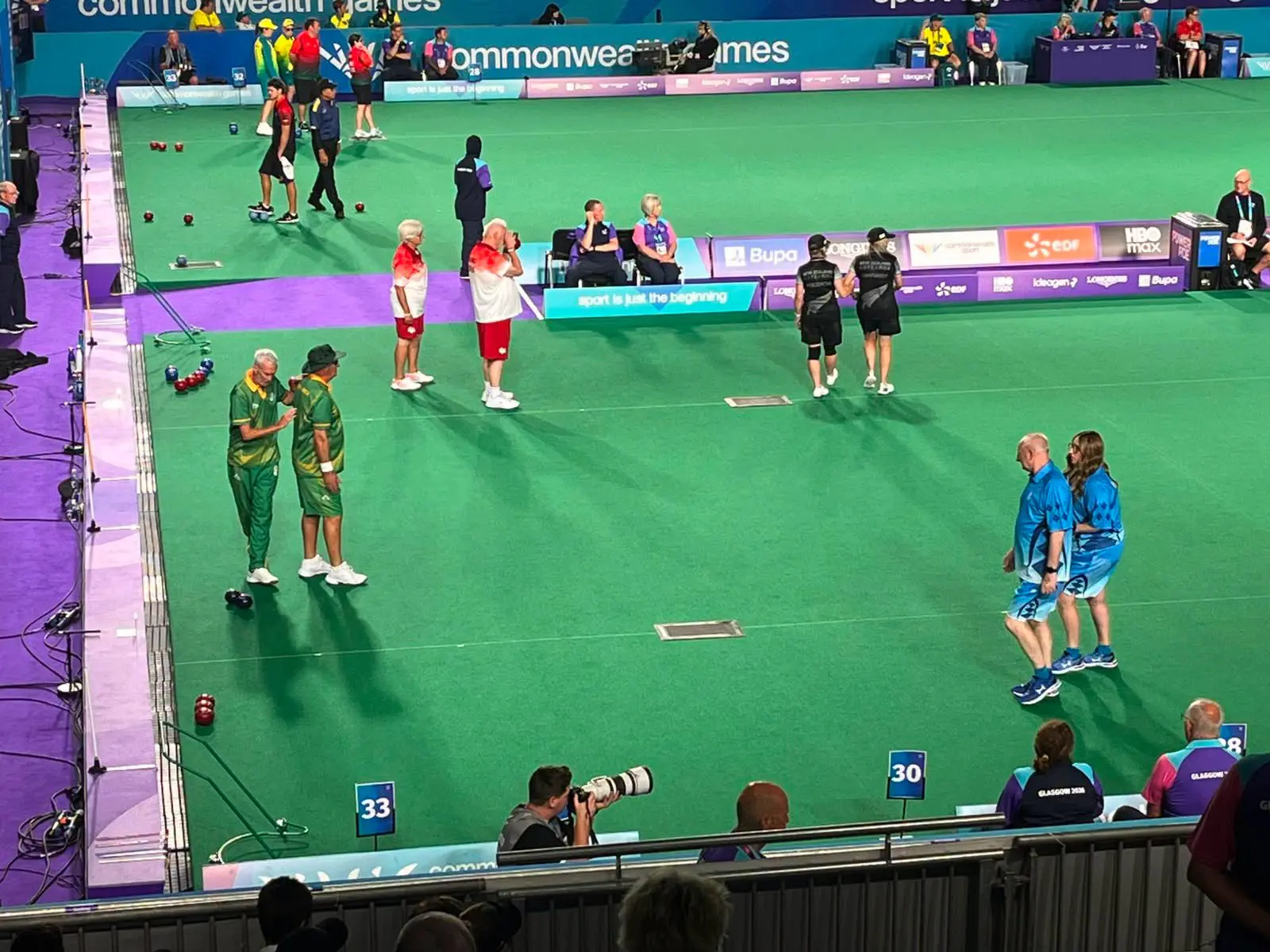
South African lawn bowls athlete Keith Orrell (black hat) and Trevor Freeman at the Commonwealth Games. Picture: Bowls South Africa/Facebook
Preparation for indoor competitions presents unique hurdles. Playing on local South African grass greens is vastly different from the fast artificial indoor carpet used at events like the Glasgow Games.
Orrell noted that practising on grass compared to indoor carpet is " like trying to play tennis with a badminton or squash racket."
Despite these challenges, representing South Africa under SASCOC remains the absolute peak of Orrell's long career. Wearing the green and gold is a privilege he holds dear, as is his successful mixed pairs partnership with Princess Shroeder.
The pair previously claimed gold together in Israel in 2019 and went on to win three consecutive national pairs titles.
Looking ahead, Orrell has no plans to slow down and hopes to play well into his 90s. Beyond his personal goals, he advocates for better accessibility at local sports venues, noting that basic wheelchair accessible toilets are still urgently needed across many bowling clubs.
For Orrell, staying competitive comes down to passion, health and a positive mindset.
" In order for one to try to remain competitive in the game of Lawn Bowls, one must enjoy playing the game," he said.
Never miss a major story. Get breaking news and the latest developments from South Africa and beyond as they happen.