Tired after 8 hours of sleep? Dr Michael Mol explains why, and shares 5 things you can do about it
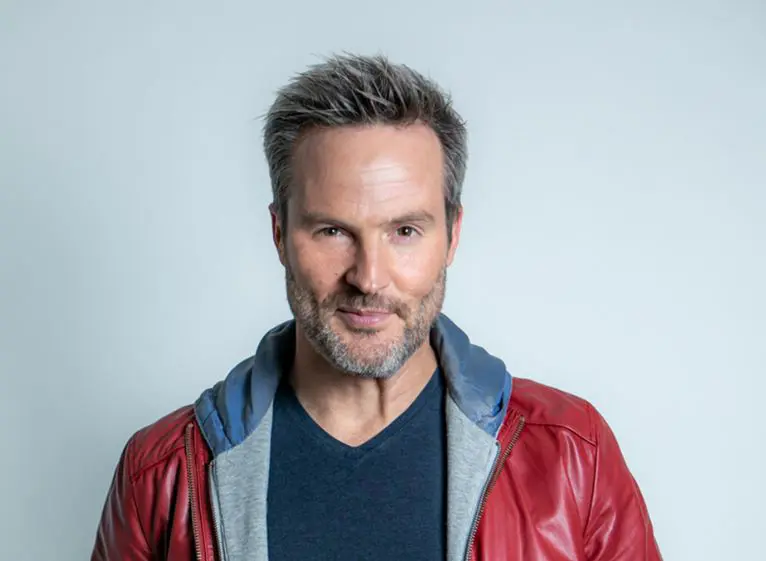
Still exhausted after a full night’s sleep? Dr Michael Mol says tiredness may be about how your body produces energy, and shares five things you can do about it.

Feeling tired even after a full night’s sleep? Dr Michael Mol explains why you may still feel exhausted and shares five things you can do to improve your energy. (Picture credit: peopleimages12/123rf.com)
If you regularly wake up after a full night’s sleep and still feel exhausted, Dr Michael Mol says the problem may not simply be that you need more sleep.
In an episode of Cipla Health Matters, Mol argues that persistent tiredness can instead be linked to the way the body produces and manages energy.
“When did you last feel genuinely, properly, embarrassingly energetic?” he asks.
For people who struggle to remember, Mol says they may be experiencing what he describes as “chronic low-grade energy depletion”, a state in which people operate at less than their full capacity but gradually come to regard it as normal.
“Most people think they know why,” he says. They assume they did not sleep enough and that one good night’s sleep, a less busy week or a holiday will solve the problem.
“But for most people, tiredness is not a sleep problem. It’s an energy production problem.”
Also check out these Cipla Health Matters episodes by Mol:
— Dr Michael Mol warns 6 hours of sleep could be damaging your brain and heart
— The '95% safer' vaping claim isn't backed by science, says lung specialist
— Dr Michael Mol and vaccine expert bust myths putting South Africans at risk
Your body’s energy factories
Mol says the key to understanding persistent tiredness lies in a molecule called ATP, or adenosine triphosphate.
He describes ATP as the “actual currency of energy” in the body, powering everything from thinking and breathing to movement, digestion and fighting infection.
Most ATP is produced inside mitochondria, tiny structures inside cells that Mol describes as the body’s “energy factories” or “cellular power stations”.
His analogy is a familiar South African one.
“Imagine your city has perfectly good water in the reservoir. Think Jozi. But the pipes are corroded. The pumping stations are understaffed, and the pressure is too low to get water to the top floors.”
The supply is there, he says, but the delivery system is not working properly.
“You might sleep 8 hours, but if your cells can’t convert that rest into energy, you still wake up like you’ve been hit by a truck.”
Mol identifies several factors that he says can interfere with this system, including chronic stress, ultra-processed food, physical inactivity and poor deep sleep.
Also check out these Cipla Health Matters episodes by Mol:
— Dr Michael Mol recommends daily habit to ease winter congestion
— Gerda Steyn tells Dr Michael Mol why recovery is the secret behind elite performance
— Dr Michael Mol reveals silver bullet against colds and flu

Why the afternoon crash may feel so familiar
Mol also focuses on blood sugar regulation.
He says a diet heavy in refined carbohydrates, including foods and drinks such as white bread, maize meal, rice and cold drinks, can create what he describes as a “blood sugar roller coaster”.
According to Mol, refined carbohydrates can cause blood sugar to spike, followed by an insulin response and a subsequent drop in blood sugar.
He says the resulting crash can leave people feeling irritable, foggy and craving more sugar.
“That afternoon slump you think is normal, it’s a blood sugar crash,” he says. “It’s not normal. It’s metabolic dysfunction.”
Mol says the cycle can become self-perpetuating: tiredness leads to cravings for quick energy, which leads to sugary foods or drinks, followed by another crash.
“When you’re tired, your body craves fast energy, which is glucose,” he says. “So, you reach for the biscuit, the chocolate, the cold drink, and it works for about 20 minutes.”
But, he argues, the subsequent crash can leave you feeling worse.
“You’re not refuelling. You’re destabilising.”
More sleep may not be the answer
For someone who is constantly tired, simply spending more time in bed might seem like the obvious solution.
Mol argues that it is not necessarily so.
“Sleeping 9 or 10 hours when your energy system is broken doesn’t fix the energy system,” he says.
Instead, he says, the quality and architecture of sleep matter more than simply increasing its duration.
He also warns against dismissing persistent tiredness as nothing more than stress.
“I’m just stressed. Full stop,” he says, describing what he sees as a common way of explaining fatigue.
But Mol argues that stress is not an explanation in itself.
“Stress is not an explanation. Stress is a mechanism, and it has very specific physiological consequences that can be specifically addressed.”
His point, he says, is that waiting for life to become less stressful is not necessarily a solution.
“Life doesn’t get calmer. You have to build a system that can handle it.”
Five things Mol says can help
Mol lays out five approaches that he says can help improve energy levels.
1. Get morning sunlight
His priority is anchoring the circadian clock.
Mol recommends going outside within 20 minutes of waking and getting actual outdoor light on your face.
“No sunglasses, no window glass, actual outdoor light, even on an overcast day,” he says.
He recommends spending five to 10 minutes outside and doing it before reaching for your phone.
He also recommends avoiding screens during the final 60 minutes before bedtime, arguing that protecting darkness at night is important for deep sleep.
2. Stabilise your blood sugar
Mol describes this as potentially the fastest intervention for improving how energy feels during the day.
He recommends eating protein at breakfast, giving examples including eggs and Greek yoghurt, while reducing refined carbohydrates and sugary drinks.
He specifically mentions white bread and mid-morning rusks, and suggests replacing white maize meal with beans where possible.
The point, he says, is not that carbohydrates are inherently bad, but that the form they take matters.
“Slow carbohydrate release glucose steadily,” he says. “Fast ones are like a biological ambush.”
3. Test your iron and thyroid
Mol says people struggling with persistent tiredness should not simply guess at the cause.
He recommends speaking to a doctor about testing iron and thyroid function.
In particular, he says people should ask about ferritin rather than relying only on a full blood count, as well as asking about w.
He highlights iron deficiency and subclinical hypothyroidism as causes of fatigue that he says can be missed in clinical practice, particularly among women.
“Both will make you feel exhausted and brain fogged regardless of how much you sleep,” he says.
4. Build your mitochondria
Mol's fourth recommendation is physical activity, specifically resistance or strength training.
He says even two moderate weight-training sessions a week can trigger a process called mitochondrial biogenesis.
The idea, he explains, is that cells can make more mitochondria, increasing their capacity for energy production.
The difficulty, of course, is that exercise can be the last thing a tired person wants to do.
“The irony, of course, is that when you’re tired, exercise is the last thing you want to do,” Mol says.
His advice is to start small, suggesting 30 minutes of walking combined with some bodyweight exercises before building from there.
He also returns to sleep quality, recommending consistent sleep and wake times seven days a week and a cool, dark bedroom.
Mol additionally advises avoiding alcohol within three hours of bedtime, arguing that while it may help someone fall asleep, it can interfere with restorative deep sleep.
5. Reduce your inflammatory load
Mol's final recommendation is aimed at reducing what he describes as the body's inflammatory load.
For South Africans, he says the most impactful single change may simply be cutting sugary drinks and ultra-processed foods.
He also recommends increasing omega-3 fatty acids through oily fish or a supplement, eating a greater diversity of plants and managing psychosocial stress by deliberately building recovery time into the week.
“These are not luxuries,” he says. “They’re biological necessities.”
Tiredness isn't necessarily just ‘how you are’
Mol's central message is that persistent tiredness should not simply be accepted as an inevitable part of a busy life.
“It’s not your personality,” he says. “It’s not just how you are.”
Nor, he argues, should it automatically be regarded as an unavoidable consequence of being busy, getting older or living in South Africa.
Instead, he describes tiredness as a biological state with identifiable causes that can potentially be addressed.
“Your cells want to make energy. Your mitochondria want to fire,” he says.
But rather than trying to change everything at once, Mol ends with one simple recommendation: start with morning sunlight.
“Not five things. You’ve got the five. One this week, get morning sunlight. Make it a habit.”
He suggests setting an alarm 20 minutes before it is necessary to get up for work, going outside and standing in the light without using a phone.
“It sounds absurdly simple for something so foundational,” he says, “but that one habit begins to pull the rest of your system back into order.”
“Better sleep follows, better energy follows, better decisions follow.”
“Start there. Your body will do the rest.”
Never miss a major story. Get breaking news and the latest developments from South Africa and beyond as they happen.