FIKILE MOYA | Zeroing in on AI disinformation during elections
The Electoral Commission regularly identifies and warns the public about fake IEC online platforms advertising non-existent jobs and requesting applicants’ personal information.
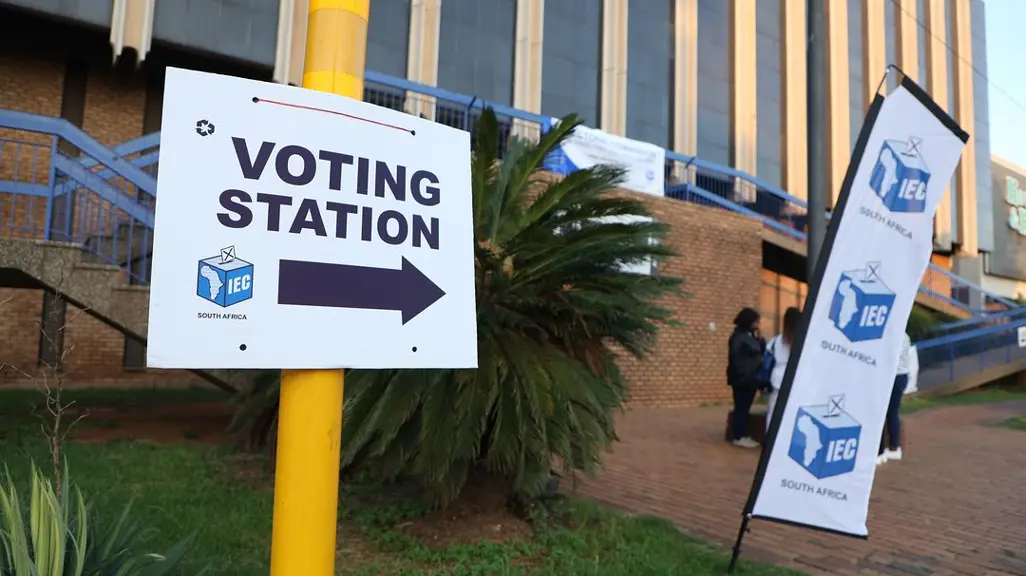
Picture: Instagram/iecsouthafrica
Last year, South African television screens flashed dramatic scenes of a Soweto high school engulfed in flames.
It was breaking and deeply emotional news because Orlando West High School is one of Soweto’s oldest and most iconic schools, counting many prominent South Africans among its former learners and teachers.
The story, however, was fake.
Someone had used artificial intelligence (AI) to create convincing but entirely false content.
This illustrates how AI is becoming increasingly capable of simulating reality and shaping public narratives.
In another example, South Africans were presented with social media posts showing people who appeared to be from the Horn of Africa and the Indian subcontinent contesting by-elections in different parts of the country.
The apparent intention was to create the false impression that the Electoral Commission allows non-South Africans not only to vote but also to stand for election.
The Electoral Commission also regularly identifies and warns the public about fake IEC online platforms advertising non-existent jobs and requesting applicants’ personal information.
In some cases, these scams even demand payment.
Against this backdrop, it is reasonable to expect that generative AI will play a significant role in attempts to influence the hearts and minds of voters ahead of the 4 November 2026 Local Government Elections.
If there is any consolation, South Africa is not alone.
A report by the International Panel on the Information Environment (IPIE), The Role of Generative AI Use in the 2024 Elections Worldwide, makes for both fascinating and concerning reading.
Covering the 50 countries that held elections during 2024, the report analysed 215 incidents involving the use of AI during election or campaign periods.
One of its key findings is that advances in generative AI have enabled those intent on deception to scale up their activities. These include increasingly sophisticated audio and video deepfakes, coordinated bot networks and AI-powered chatbots that rapidly generate and amplify misleading content.
It would not be unrealistic to imagine similar tactics being employed in South Africa.
Indeed, the report was developed precisely to help countries preparing for elections anticipate and respond to the misuse of AI in the electoral process.
How, then, do we mitigate the misuse of AI while safeguarding free, fair and credible elections?
The Electoral Commission has important responsibilities. So do political parties, independent candidates, the media and voters. Their roles differ, but each is equally important.
The Constitution requires the Electoral Commission to manage national, provincial and municipal elections and to ensure that they are free and fair before declaring the results within the period prescribed by law.
Misinformation and disinformation, particularly false claims about the integrity, freeness or fairness of elections, have the potential to undermine public confidence in the electoral process and ultimately the credibility of the results.
The Electoral Commission must therefore proactively identify false information and communicate accurate corrections as quickly as possible.
To this end, the Commission has strengthened its capacity to detect and respond to misinformation and disinformation.
It has established a Digital Content and Engagement team responsible for producing digital content, managing online engagement across the Commission’s social media platforms and monitoring performance through social media analytics.
The team includes Disinformation Analysts who monitor, identify, escalate and respond to misinformation (incorrect information), disinformation (deliberately false and misleading information) and malinformation (truthful information shared maliciously out of context). Their work provides intelligence that informs proactive content aimed at countering false narratives.
Supporting them is a Content Production team responsible for producing videos, graphics, photography, animations and other multimedia content that strengthens the Commission’s public communication.
The Commission has also engaged with major social and digital media platforms to improve the identification of, and where appropriate, the removal of harmful false content that threatens the integrity of elections and electoral democracy.
In addition, the Commission has published for public comment the proposed Electoral Code of Conduct Countering Disinformation in terms of the Local Government: Municipal Electoral Act.
The proposed Code seeks to protect the integrity of elections by prohibiting the creation, sharing and amplification of false or misleading information that could undermine the electoral process, incite violence, suppress voter participation or erode public trust.
Political parties and candidates would be required to refrain from disseminating disinformation, take reasonable steps to ensure that their members and supporters comply with the Code, promptly correct false information associated with them and cooperate with the Electoral Commission in promoting truthful and responsible election communication.
Public comments closed on 29 July 2026.
These proposals complement the long-established Electoral Code of Conduct, under which political parties commit themselves to promoting conditions conducive to free and fair elections.
This includes respecting democratic political activity, supporting free political campaigning and open public debate, and refraining from publishing false or defamatory allegations against other parties or candidates.
While the existing Code already prohibits certain forms of misconduct, the IPIE report suggests that the rapid rise of AI may require political parties to make explicit commitments to the ethical use of AI in their election campaigns.
The South African media and independent fact-checking organisations also have a critical role to play in countering misinformation and disinformation.
Working with organisations such as the South African National Editors’ Forum and the Media Development and Diversity Agency, the Electoral Commission has trained journalists from both mainstream and community media to strengthen the quality and accuracy of election reporting.
Even so, more will need to be done as the country approaches the 4 November 2026 elections.
Unfortunately, we should expect those who spread misinformation and disinformation to continue targeting voters.
Their objectives may include persuading citizens to vote in a particular way, discouraging them from voting altogether or undermining confidence in the election results.
This makes it essential for voters to exercise caution when consuming information, particularly when it originates from anonymous or dubious sources.
Some common warning signs of fake news include highly emotive language designed to provoke anger or fear, as well as vague references such as “yesterday” or “last week” instead of specific dates, allowing false stories to appear perpetually current.
Similarly, if an alleged major news story appears only on a little-known website or broadcaster and is not reported by established news organisations, there is good reason to question its credibility.
Significant news events are almost always covered by multiple reputable media outlets.
Just as the IPIE described the 2024 elections around the world as the “AI Elections”, South Africans should prepare for AI to play a significant role in our own election campaign.
It is not the Electoral Commission’s role to tell South Africans how to vote. Whatever choices citizens make, we hope those decisions will be based on facts rather than manipulation by those who seek to undermine one of our most hard-won democratic rights: the right to choose who governs us.
We therefore urge voters to remain alert to AI-generated content throughout the campaign period. We also call on political parties and candidates to act responsibly by using AI ethically and contributing to a transparent, truthful and respectful campaign environment that supports free and fair elections.
Ultimately, every citizen has a responsibility to critically assess the information they encounter before accepting or sharing it.
Fikile Moya is General Manager: Communications at the Electoral Commission of South Africa.