The risks to shipping as Iran digs in for control of Strait of Hormuz
The latest reports on the Middle East conflict suggest a deal with Oman would give Iran control over ships entering the Strait.
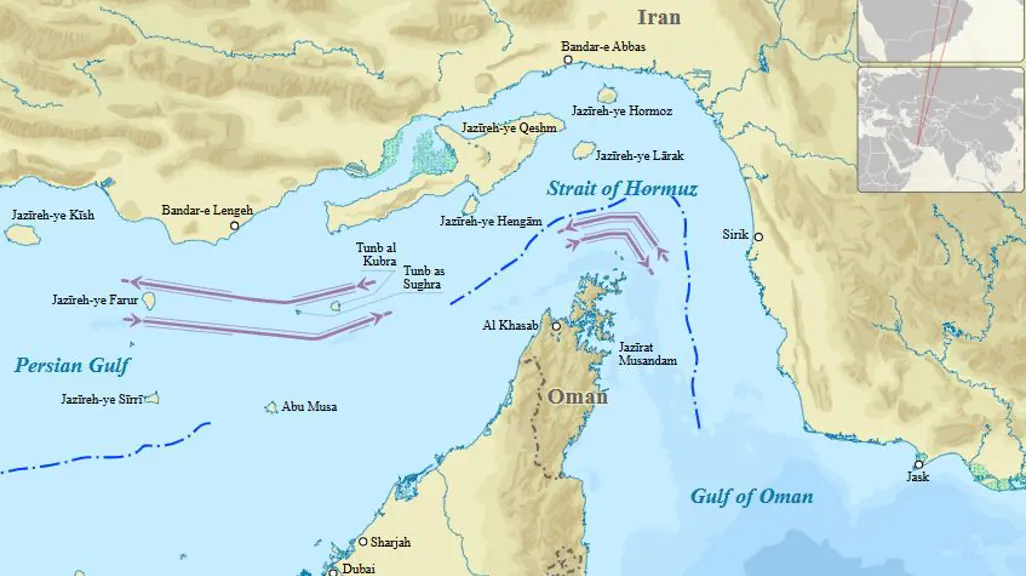
The Strait of Hormuz. Image: Wikimedia Commons
In the latest reports on the conflict in the Middle East, Iran is widely quoted as saying a deal with Oman to reopen the Strait of Hormuz is close to being finalised.
At the same time though, Reuters quoted Iranian sources as rejecting claims by US President Donald Trump that an ageement was imminent, with important details still to be agreed on.
It's also suggested that the deal would give Tehran control over ships entering the Strait, which passes through the territorial waters of both Iran and Oman.
As is being felt with fuel price fluctuations throughout the world, this is a key waterway for transporting oil and related raw products.
Stephen Grootes interviews Timothy Walker, Maritime Project leader and senior researcher at the Institute for Security Studies.
Walker says giving Tehran control of the Strait would be unprecedented.
"One of the fundamental provisions of international maritime law recognises the Strait of Hormuz and various other international straits shared between countries in which no one is supposed to dominate, as free for anybody to sail through. What Iran in particular is proposing is to have an unprecedented kind of control over ships for instance going through from the east to the west, by staying closer to its shore."
The shipping community would be looking at this proposed measure with a great deal of trepidation, he says, with little confidence that it would be a sustainable solution.
RELATED:
- Iran says close to Hormuz plan with Oman, but reopening depends on US
- Trump dismisses reports of munitions shortages, says US has 'massive amounts'
The maritime expert notes that Iran has also linked its actions in the Strait to whether sanctions relief is going to be part of the package in the future.
"What Iran has done here and done very successfully, is exert as much control as it possibly thinks it can get away with... as a negotiating chip in a way for some of the bigger deals which it's very dependent on such as sanctions relief."
"There's so much riding on this as well... Iran and violence against shippings unfortunately is never really far away from the equation. They've demonstrated they've got the ability to attack ships and they're willing to do so."
Adding to the uncertainty is that there are seemingly two parallel negotiation processes happening at the same time.
"There is the existing one happening with Iran and Oman right now, which does seem to be heading towards some kind of regional agreement, although I'm not sure how Saudi Arabia and the other Gulf states would acquiesce. And then there's the one which the US is confidently and continuously saying is ongoing as well, but doesn't seem to accord with what is actually happening in terms of negotiations with Iran and Oman."
Ships trying to sail through the Strait without some kind of Iranian agreement will likely remain at risk, says Walker.
"If there are going to be continued attacks or insecurity, that will result in an increased oil price and increasingly potentially the cost of inflation and goods elsewhere in the world going up in price as well."
Scroll up to the audio player to hear more from the maritime expert about the outlook for an agreement on the future of the Strait of Hormuz