Only a matter of time? Health Department strengthens Ebola preparedness
Thirdy-six hospitals have been identified to treat Ebola patients and thousands of healthcare workers have received specialised training.
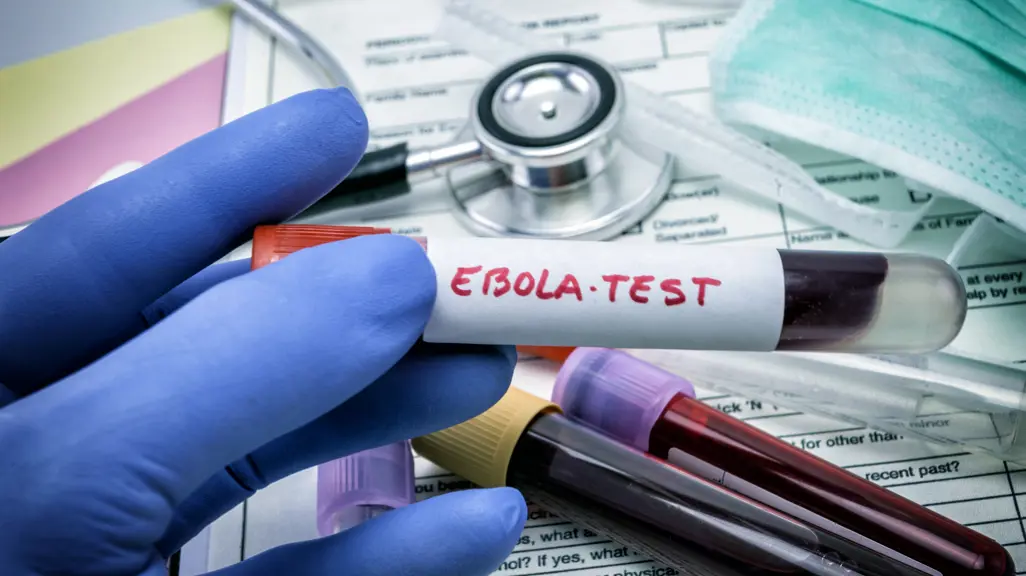
Ebola virus test, conceptual image. Picture: AFP
With outbreaks continuing in the Democratic Republic of the Congo (DRC) and Uganda, some experts believe it's only a matter of time before South Africa records its first case of Ebola.
The Department of Health has warned that the risk of it spreading to other countries remains if the outbreaks are not contained.
"We anticipate that if the infection continues to spread and remains unabated, the risk of it spreading to other countries is going to continue," said Deputy Director-General and Head of Pandemic Preparedness and Response Dr Anban Pillay, speaking on 702's Early Breakfast.
His comments come after Health Minister Aaron Motsoaledi announced that emergency response structures have been implemented in South Africa.
Some 36 hospitals have been identified to treat Ebola patients, and thousands of healthcare workers have received specialised training.
"[Firstly], these facilities have specialised structures in order to manage infectious diseases of this nature. Secondly, they have the equipment for it. And thirdly, the staff, both the nurses as well as the doctors and these facilities, are specialised in infectious diseases. They understand what to do and would be quite effective since they've been dealing with these kinds of cases before," said Pillay.
ALSO READ: SA’s Ebola risk low despite spiralling outbreak in DRC, Uganda - NICD
While the current Bundibugyo strain of Ebola has no vaccine, Pillay said South Africa's response does not rely on vaccination alone.
"In the absence of a vaccine, there are a number of interventions that we would have in place," he said.
These include isolating suspected cases, ensuring treatment facilities have the necessary equipment and making sure healthcare workers are trained to manage patients safely.
ALSO READ: Global health group pumping R1bn into development of Ebola vaccine
The Department of Health has also heightened screening at South Africa's ports of entry.
Pillay said officials have also carried out simulation exercises to make sure border staff are prepared, while passenger information is being reviewed before international flights arrive.
"There are also temperature checks in place. Additionally, we do also receive an electronic report before a flight arrives detailing the passengers and where they're coming from. Passengers arriving from areas that are potentially high risk for the importation of Ebola are usually screened more intensively."
Pillay explained that Ebola is transmitted differently from COVID-19, which could spread before symptoms appear.
And, he said, Ebola generally requires direct physical contact with an infected person.
"It's only after about five days or so that you then start getting features that would start suggesting Ebola. But fortunately, in the early stages, they're not infectious either. So that's much better than Covid, because with Covid you are always infectious, even before you started presenting with symptoms."