SA delegation heads to Washington to stave off another potential blow to exports
The proposed measures follow a us investigation which concluded that the country does not have a specific and enforceable prohibition on imports produced through forced labour.
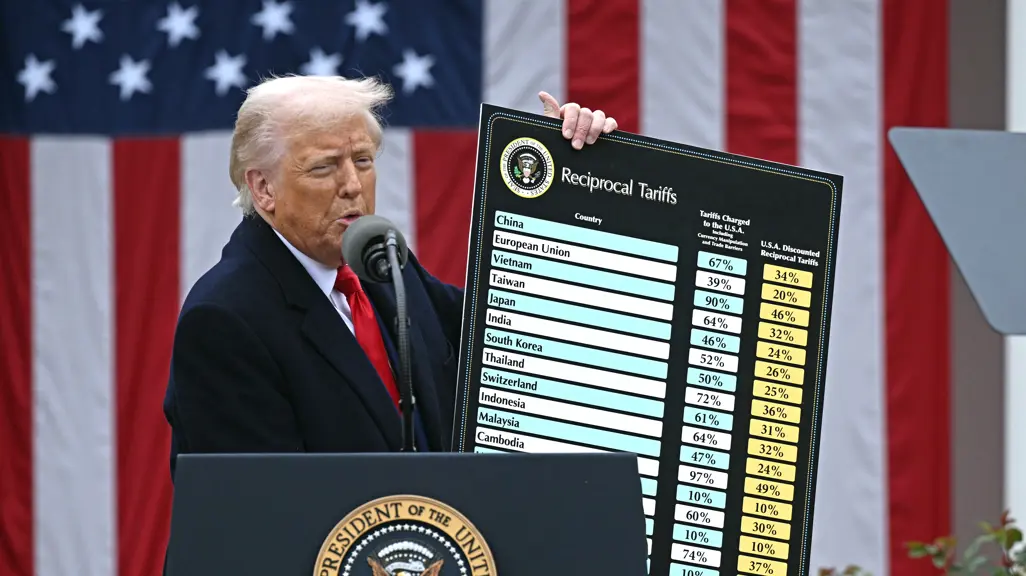
US President Donald Trump delivers remarks on reciprocal tariffs as US Secretary of Commerce Howard Lutnick holds a chart during an event in the Rose Garden entitled "Make America Wealthy Again" at the White House in Washington, DC, on 2 April 2025. Picture: Brendan SMIALOWSKI/AFP
South Africa is heading to Washington this week in a bid to stave off another potential blow to exports, as government officials prepare to challenge proposed new United States tariffs.
A South African delegation will appear before the us trade representative during a three-day public hearing into plans to impose additional tariffs on imports from several countries, including South Africa.
The proposed measures follow a us investigation which concluded that the country does not have a specific and enforceable prohibition on imports produced through forced labour.
While the South African government argues that existing labour, customs and anti-human trafficking laws already provide adequate safeguards, US authorities say these measures fall short of international expectations.
The hearing comes at a sensitive time for trade relations between Pretoria and Washington as South Africa is already facing uncertainty over its preferential access to the us market under the African Growth and Opportunity Act.
At the same time exporters have also had to contend with previous tariff threats from the Trump administration.
Government is expected to argue that imposing new tariffs would unfairly penalise local businesses and workers, rather than address concerns over forced labour.
It is also expected to stress the country's commitment to upholding labour rights and international trade obligations.
If the tariffs are approved, South African products exported to the United States would become more expensive and less competitive.
Industries likely to be hardest hit include the automotive sector, agriculture, and mining; sectors that support thousands of jobs and generate billions of rand in export earnings.
The hearings will conclude later this week, after which the US trade representative will decide whether to implement, amend or abandon the proposed tariffs.