Godongwana warns rivals to stop twisting facts on spending
Political parties across the spectrum on Tuesday questioned the spending priorities as the National Assembly looks to pass the 2026 budget tabled by Godongwana in February.

Finance Minister Enoch Godongwana responds to the debate on the Appropriation Bill in the Good Hope Chamber on 23 June 2026. Photo: Phando Jikelo/Parliament
Finance Minister Enoch Godongwana said that in an election year, political parties must not “twist facts” about how the government is spending its money.
Political parties across the spectrum on Tuesday questioned the spending priorities as the National Assembly looks to pass the 2026 budget tabled by Godongwana in February.
The finance minister said that it’s untrue the government is not making allocations to ease the lives of the country’s most vulnerable, but that there needs to be more accountability as to how the money is being spent.
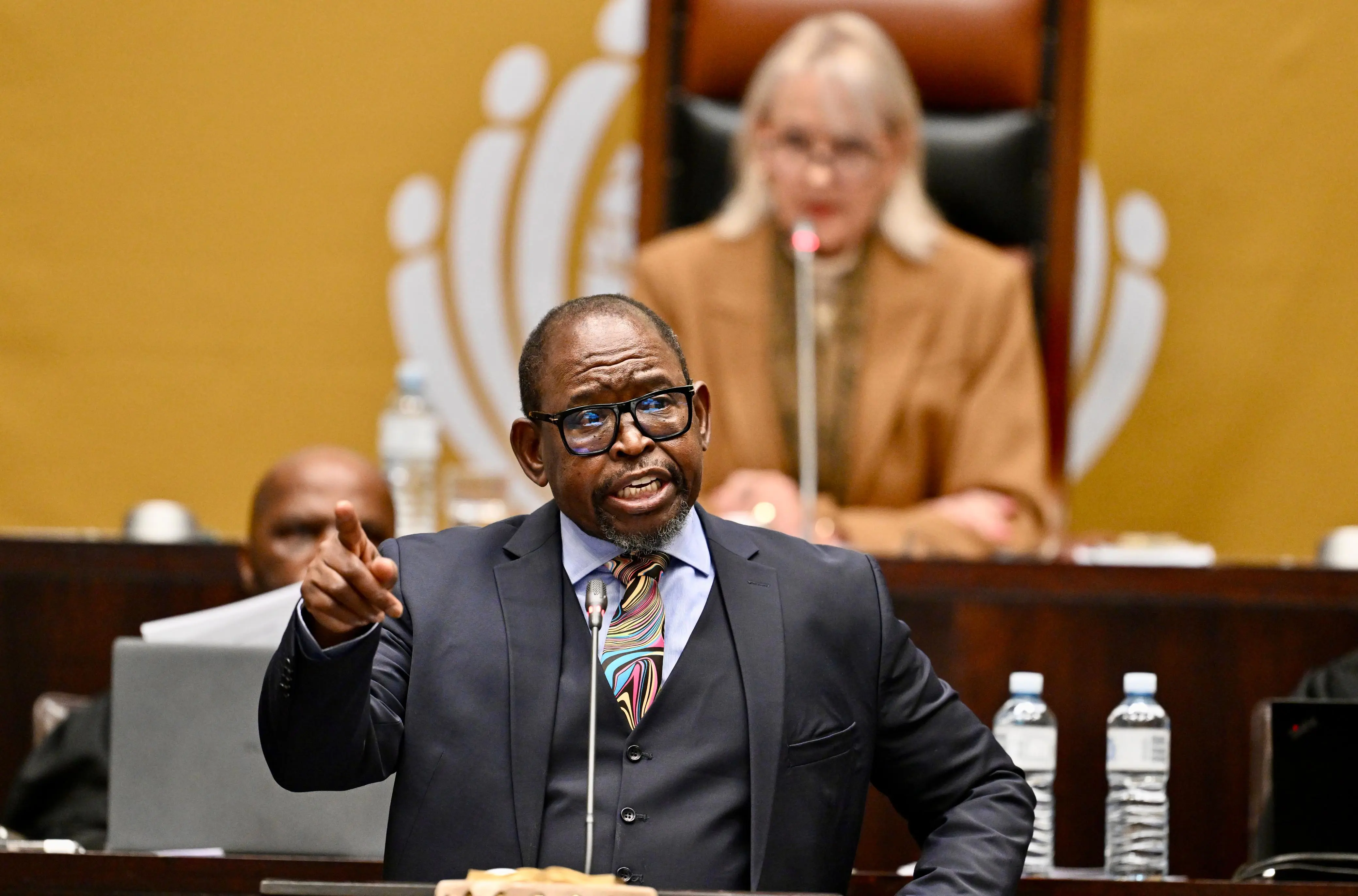
Finance Minister Enoch Godongwana responds to the debate on the Appropriation Bill in the Good Hope Chamber on 23 June 2026. Photo: Phando Jikelo/Parliament
While Chairperson of Parliament’s Appropriations Committee Mmusi Maimane bemoaned the lack of resources for the legislature to make meaningful changes to the national budget, Minister Godongwana praised the committee for the quality of the inputs made to the budgeting process.
But he hit back at opposition parties such as the MKP, EFF, and NCC who said that not enough money is being spent on the country’s poorest citizens.
Godongwana said that of the R1-trillion allocated to national departments, more than R300 billion is spent on grants.
Godongwana said it’s also untrue that funding is not being made available to employ young doctors.
Godongwana added that ministers must be held responsible for how they are spending their budget allocations, rather than for political parties to suggest the state is failing to fund critical services such as health and policing.