Foreign-owned spaza shops under scrutiny as business visa figures spark debate
Just 33 business visas were approved in the past financial year, reigniting debate over immigration compliance, foreign-owned spaza shops and regulation in township economies.
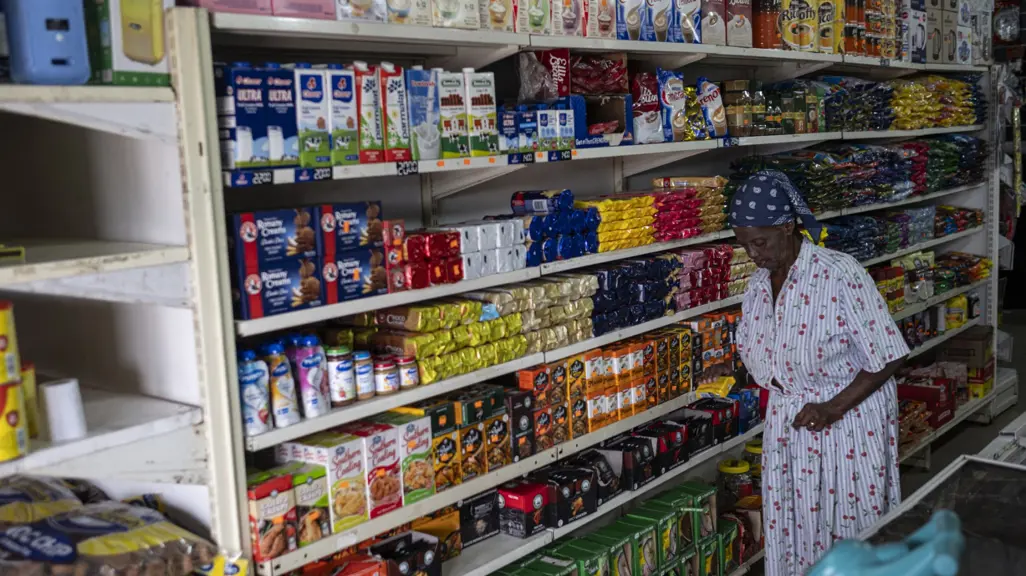
A shopper browses shelves inside a township spaza shop as debate intensifies over immigration compliance, business visas and the regulation of foreign-owned businesses in South Africa. (Photo by Emmanuel Croset / AFP)
Concerns about immigration compliance and the regulation of foreign-owned spaza shops have been thrust back into the spotlight after Parliament heard that only 33 business visas were approved during the 2025/26 financial year.
The figure has raised questions about how tens of thousands of foreign-owned businesses believed to be operating in South Africa are being regulated, particularly in township economies where spaza shops play a significant role.
Speaking on 702/CapeTalk, General Industries Workers' Union of South Africa representative Zaki Mamdoo argued that the issue should not be viewed solely through the lens of immigration.
"The fundamental problem with the way in which it is presented is that actually it is treating the spaza shop question as a migration question," he said.
Related articles:
— Mashaba says enforcing immigration laws should not be conflated with xenophobia
— Overberg leaders use mediation to prevent tensions over foreign nationals from escalating
— KZN premier says anti-immigration protests reflect frustration with government, not xenophobia
Immigration compliance and business regulation
The discussion follows figures raised in Parliament by ActionSA that have intensified scrutiny of foreign-owned businesses operating in South Africa.
While acknowledging that the visa approval figure is striking, Mambdoo said it highlights weaknesses in the state's regulatory capacity rather than proving that migrant-owned businesses are responsible for economic challenges in townships.
He said the debate should focus on business regulation and enforcement rather than blaming migrant communities.
"It does point to a serious weakness of regulatory capacity in the state when it comes to business activity in general and certainly in terms of the informal economy," he said.
Concerns over township spaza shop compliance
Mambdoo said compliance standards remain important in township economies.
"There are issues, and there must be standards that are applied and enforced around health, around tax, around labour standards, around safety, municipal by-laws and all of these things," he said.
His comments come amid ongoing public concern about whether all businesses operating in townships comply with immigration laws, business registration requirements, tax obligations, and municipal regulations.
The regulation of spaza shops has become a major public issue as communities increasingly demand stronger enforcement and accountability.
State capacity under the spotlight
According to Mambdoo, the state's response has often focused on enforcement actions rather than addressing deeper economic challenges facing township businesses.
He argued that the government has failed to build sufficient local economic infrastructure and has not adequately supported small traders with affordable supply chains, access to credit, storage facilities and municipal services.
"The state has neglected township economies for years," he said.
Mambdoo added that enforcement alone would not solve the underlying challenges facing township economies.
Debate over jobs and foreign-owned businesses
The discussion also touched on a common perception that foreign-owned spaza shops are taking jobs from South Africans.
Mambdoo rejected that argument, saying migrant-owned businesses often operate under very different conditions.
He said many shops rely on family networks, long working hours and informal arrangements that allow them to survive on extremely tight margins.
"People would work extremely long hours," he said, adding that many operators effectively live at their businesses and absorb costs through labour and personal sacrifice.
He argued that simply replacing foreign-owned shops with South African-owned businesses would not automatically resolve the economic pressures facing township traders if high costs and broader structural challenges remain unchanged.
The debate is likely to continue as pressure grows for stronger immigration compliance, better regulation of informal businesses and greater support for township economies.