Capturing pride and reality: The Art of Masonwabe Ntloko
Ntloko, who hails from the small rural town of Idutywa in the Eastern Cape, wears many hats within the creative space. The young artist uses his skills and talent to celebrate art while positioning it at a critical juncture where it confronts the many societal challenges people face.

Masonwabe Ntloko visual artist based in Johannesburg. Picture: Ntokozo Khumalo/EWN
Through brushstrokes that provoke reflection, Masonwabe Ntloko canvases the realities of Black people, exposing both the beauty and the hardships of being black in South Africa.
Ntloko, who hails from the small rural town of eDutywa in the Eastern Cape, wears many hats within the creative space.
The young artist uses his skills and talent to celebrate art while positioning it at a critical juncture where it confronts the many societal challenges people face.
"I've built a visual language that lives in different spaces. It lives in paintings, it lives in material, which would be clothes and rags. What inspires my work is where I come from, how I grew up, and the people I grew up with. What I started realising, especially when I was in varsity, was that I come from a very culturally and traditionally rooted background," he said.
Sitting in his intimate studio amid the hustle and bustle of Johannesburg, surrounded by scattered art supplies, with the soft natural light filtering through the industrial windows. Ntloko painted a vivid picture with his words of the memories and experiences that shaped him into the artist he is today.
"I went to school in PE. There was a lack of I don't want to say humanity, but for lack of a better term, humanity, in how people interacted. When you start missing that, you begin wanting to see it reflected in the work that you create," he said.
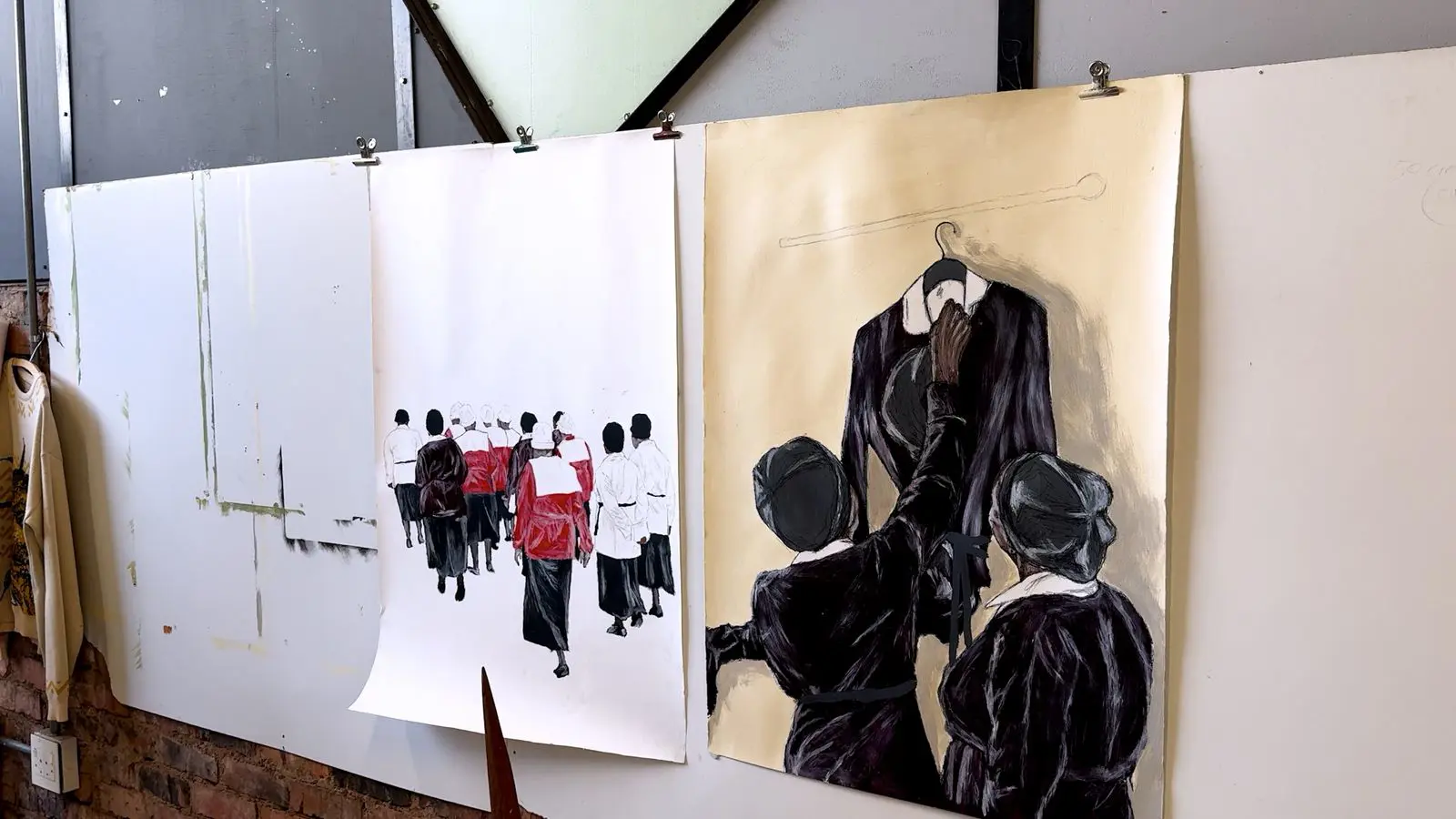
Life in his hometown is reflected throughout his body of work. From an image of a man smoking inqawe (a traditional pipe) against an earthy green background made with cow manure, to portraits of mothers dressed in neatly pressed church uniforms, Ntloko's work draws heavily from the people and traditions that shaped him.
He emphasises that his artistic journey has been marked by great care in how he depicts people's lived experiences.
“All I'm trying to do is create art that shows black people from a position of pride and power. When I make my work, those are the moments I'm trying to capture and portray to the world. As much as I want to show black people in positions of power, I also want to show the realities. I can't be stuck in this world of only looking at Black people in a particular way. I need to reflect on everything that I see,” Ntloko said.
When asked how he uses art to express his freedom as a young South African living through the legacy of sacrifices made by struggle activists, Ntloko paused thoughtfully before answering.
“There's too much happening in the country, and I feel like what has happened to artists is that everyone has created their own world and creates within that world. I am at a point in my life where I want to create work that directly speaks to issues in the country.”
These issues range from anti-illegal immigration sentiment and high youth unemployment to gender-based violence, femicide and challenges within the education system.
While the significance of these issues varies depending on people's proximity to them, they remain pressing concerns within South African society.
Ntloko believes these realities should not exist outside of art but should instead be reflected within it, serving as a mirror for both the subjects depicted and those observing the work.
Through his creations, Ntloko says he is working to challenge and redefine Western and Eurocentric perspectives that do not resonate with many South Africans.
"What I have been actively doing, especially through the rags I've been creating, is building family heirlooms. A lot of the time, what we've understood as family heirlooms are Victorian plates, mugs and porcelain dog sculptures, but none of those things tells our stories."
“So what I'm doing is creating products that tell our stories. When you buy a rag, it's a rag of someone who might look like your grandmother. It's a rag that tells a specific story. The legacy of the work that I have created up until this point would be that I was a person who loved being black, who loved being Xhosa and who loved being South African. And I showed that through the work I created,” he said.
As Ntloko continues to develop his visual language, his work remains rooted in memory, identity and community. Whether through paint, fabric or found materials, his art seeks not only to document Black life but to preserve it, ensuring that future generations inherit stories that reflect their own histories and realities.