Ebola vaccine could still be months away as experts trace latest outbreak to funeral
Health experts warn it could take up to nine months for an Ebola vaccine to be ready as investigations point to a funeral as the possible starting point of the current outbreak.
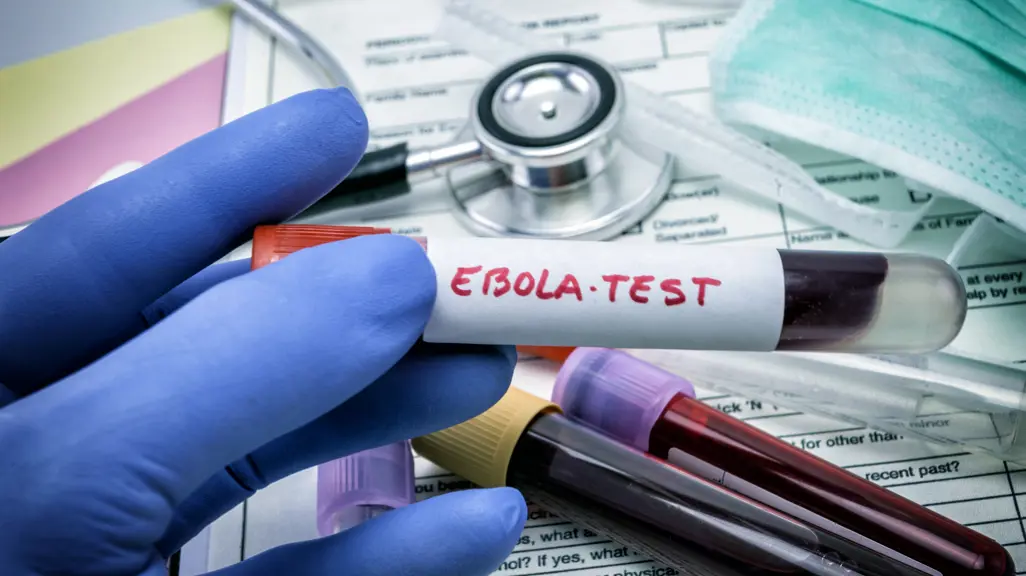
Ebola virus test, conceptual image. Picture: AFP
The World Health Organisation (WHO) says a vaccine against the latest strain of Ebola currently claiming lives in the Democratic Republic of Congo and Uganda could still be up to nine months away.
Health authorities are scrambling to contain the growing outbreak as hundreds of suspected cases and rising deaths have been reported.
The news from the WHO has raised concerns about how quickly the virus can be contained.
“This particular area of the DRC is a specific challenge because it's a conflict zone, it's a rich mining area, so there are quite dense populations, but also it's got displaced people, meaning health services are really very weak," said Professor Helen Rees of Wits.
The combination of these factors means that identifying an outbreak and responding to it quickly becomes very difficult.
RELATED: Ebola spreading faster than expected, warns Wits expert
Experts now believe the outbreak may have started at a funeral, where close physical contact and traditional mourning practices from the region may have fuelled transmission of the disease.
"Traditionally, people in this area have a lot of contact with people at funerals (as we all do), but also there's kissing of the body."
Funerals have previously been identified as high-risk events during Ebola outbreaks because of direct contact with infected bodies.
In light of the latest outbreak, all of the previous funeral protocols have been reintroduced.
"If you remember when we've had other Ebola outbreaks, one of the big prevention methods that is recommended is behaviour at funerals."
The development of a vaccine will help enormously, adds Rees.
Meanwhile, South Africa has pledged more than R40 million through the Africa CDC’s Epidemics Fund to support containment efforts across the Continent.
The funding is expected to assist with testing, surveillance, healthcare workers and cross-border monitoring systems.
"I was on a committee for the Africa CDC this week, where we declared what's called a public health emergency for continental security."
The news comes as concerns grow around the possibility of cross-border transmission.
"That is a step that allows them to mobilise funds very rapidly and get teams of people to support the response."