Interest rate hike looms as fuel prices drive inflation to 4%
The latest CPI print shows a 1.1% month-on-month increase, pointing to a likely rate hike announcement on 28 May.
An inflation warning sign as rising fuel prices and higher living costs continue to put pressure on South African households. Picture: jjvallee/123rf.com
Consumer price inflation (CPI) jumped to 4% in April, driven mainly by sharp fuel price hikes.
This is a 1.1% increase from 3,1% in March.
Statistics SA said it is the highest inflation print since August 2024, when the headline rate was 4,4%.
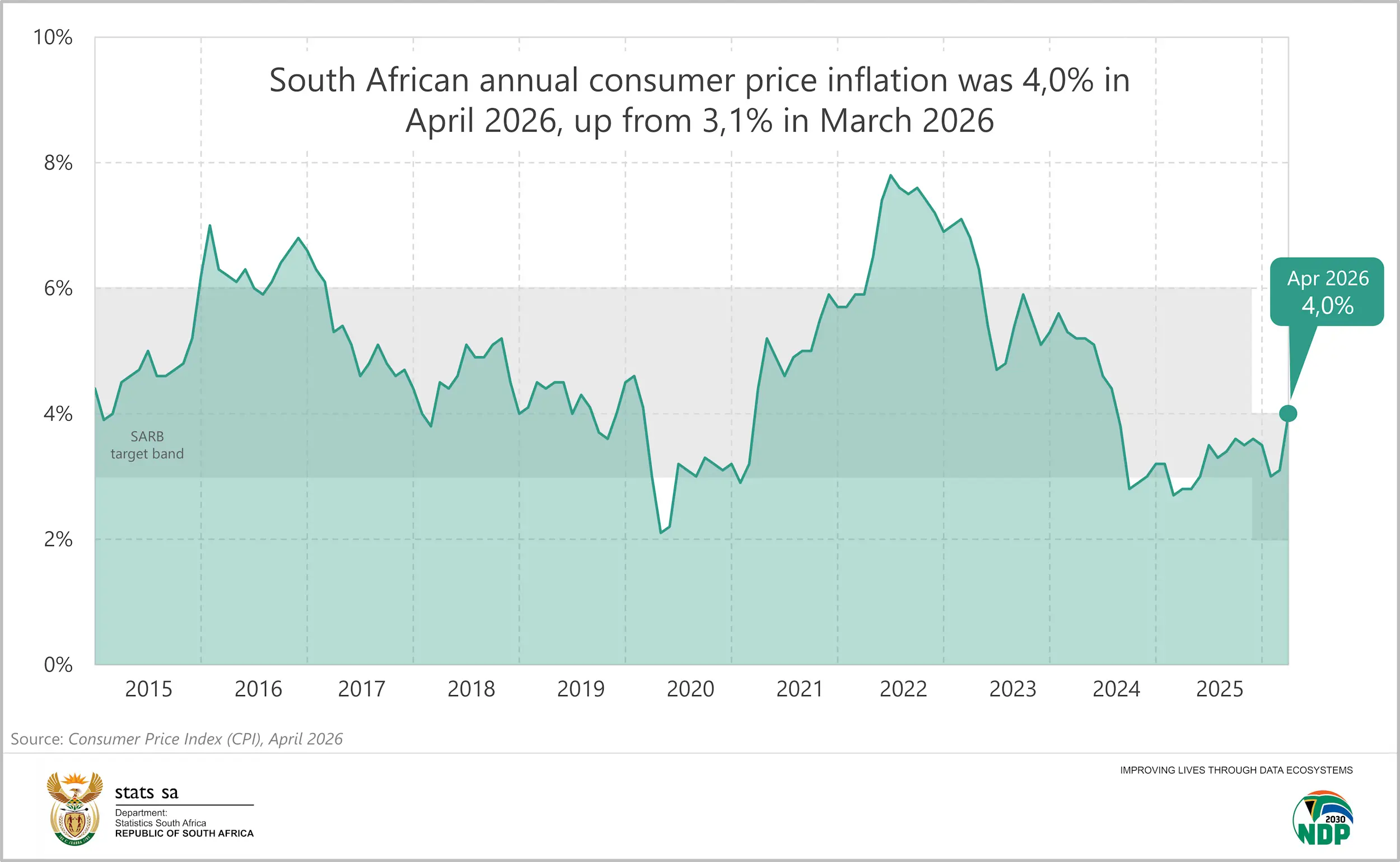
Consumer price inflation, April 2026 - Statistics SA/X
Consumers were dealt another painful fuel price blow in April, leading also to higher transport inflation.
The index for fuel rose by 18,2% from March - the steepest monthly increase since Stats SA's current CPI series began in 2008.
Petrol prices were up by 15,2% and diesel by 35,4%.
Motorists using diesel were hardest hit - the average price for a litre of diesel jumped from R21,28 in March to R28,80 in April.
The price for inland 93-octane petrol showed the fifth-largest increase for this grade in 50 years, and the biggest this century, rising from R20,19 per litre in March to R23,25 per litre in April.
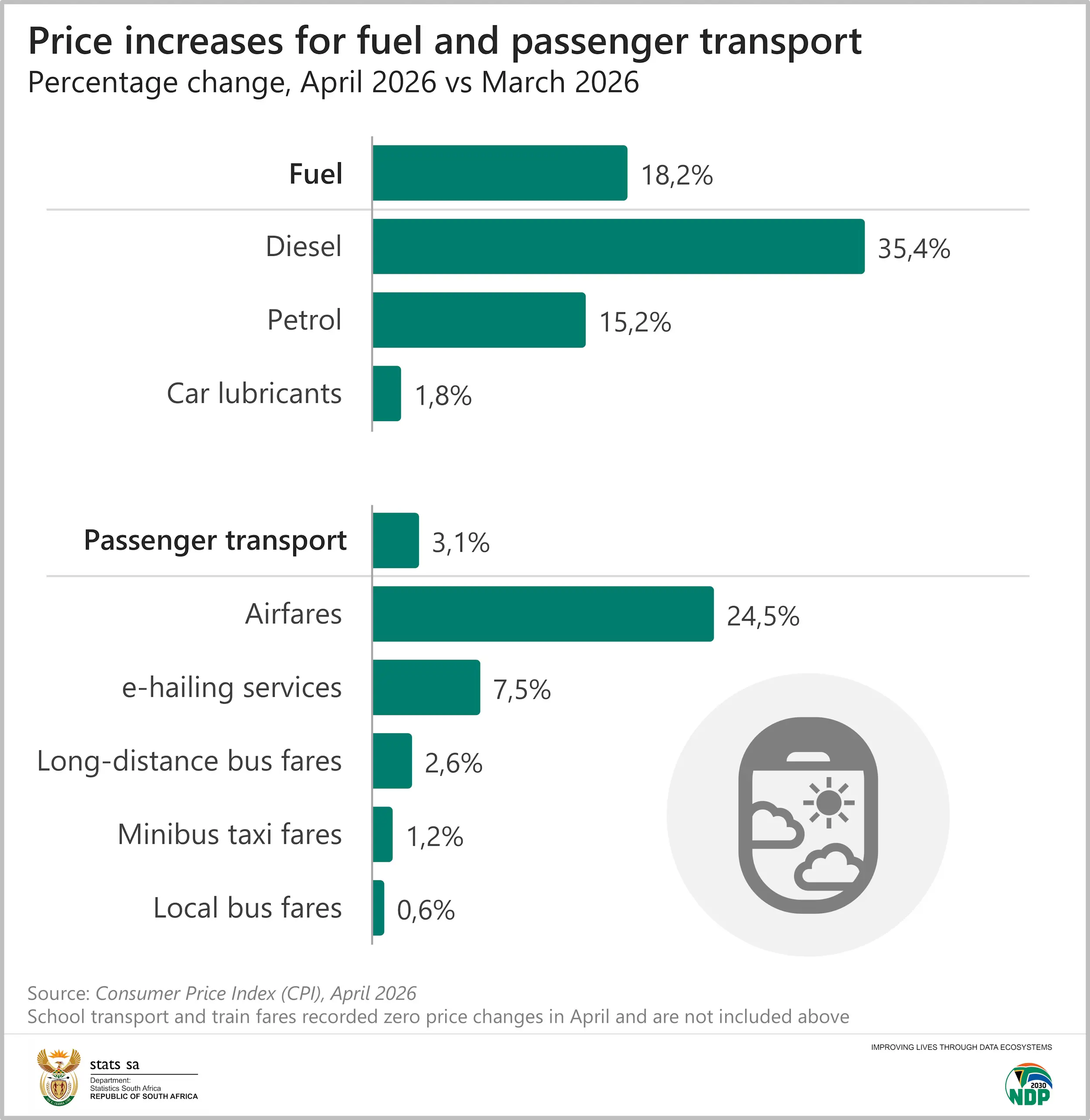
Fuel price index increase from March to April 2026 - Stats SA/X
There was some respite from the fuel price shock with food inflation slowing further in April.
Annual inflation for food and non-alcoholic beverages (NAB) decreased for a third consecutive month, from 3,6% in March to 2,9% in April.
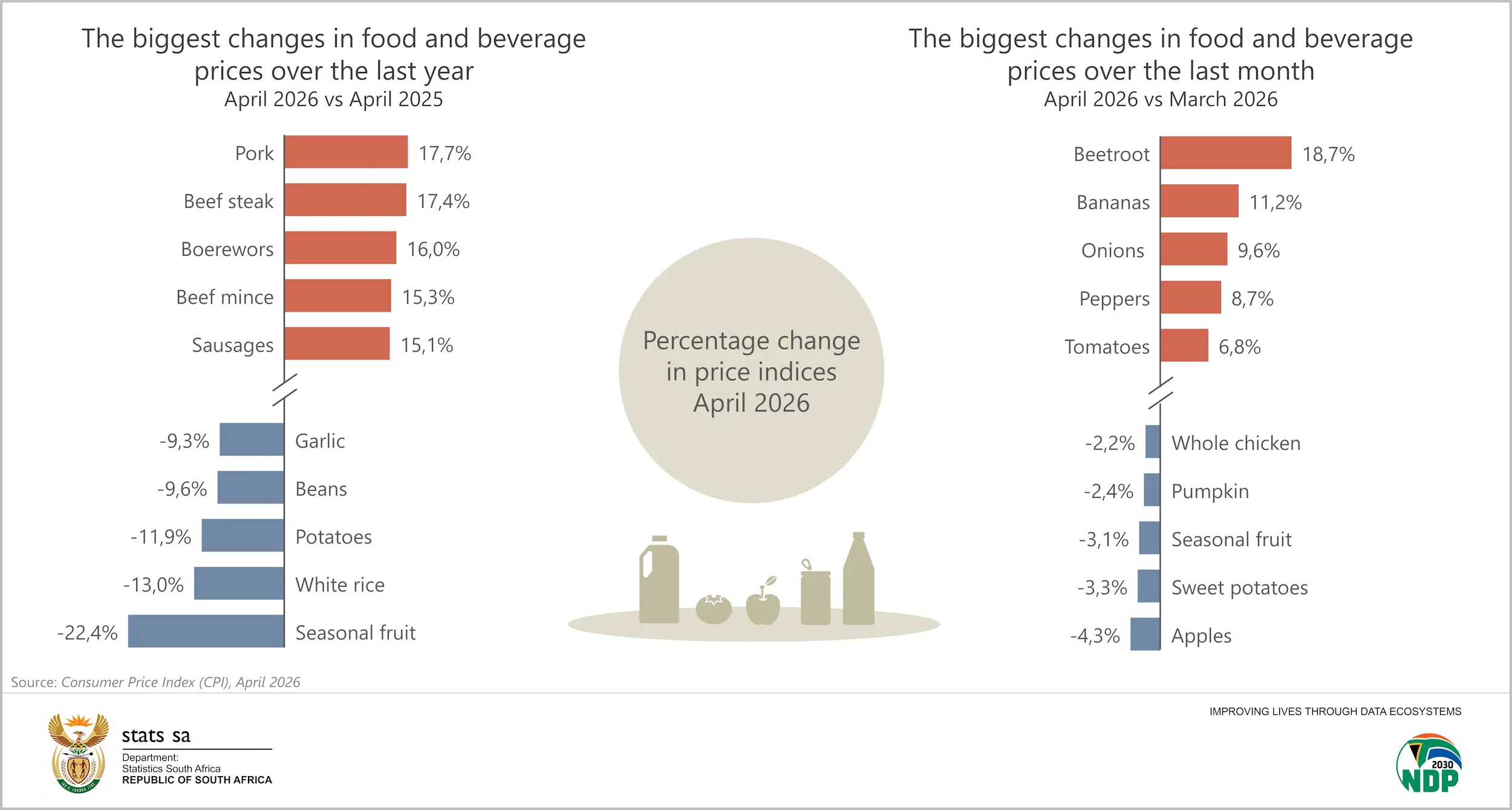
Food inflation, April 2026 - Stats SA
Momentum group economist Sanisha Packirisamy also highlights insurance and financial services inflation along with the primary driver of fuel and transport cost increases that are driving inflation.
She says that going into the months of May and June, we can expect inflation to start creeping closer to the 5% level.
RELATED: June to bring more petrol pain, but relief for diesel users
However, her longer-term forecast is more optimistic.
"The further out we go, especially if you get on a one-year horizon, you have almost big tailwinds for inflation to start coming off, because of the base effects that have been created by a very high oil price that actually help inflation get lower in the back end of 2027."
When it comes to the likelihood of an interest rate hike when the Reserve Bank's Monetary Policy Committee announces its decision next week on 28 May, Packirisamy thinks an increase of 25 basis points is likely.
"Up until a few weeks ago people were still contemplating maybe steady interest rates, but that narrative has now firmly shifted into hiking territory."
"I think at this stage they'll be taking a more cautious, data-dependent wait-and-see kind of look, and opting for 25 basis points does show that element of caution rather than going for a 50 basis-point hike."
Scroll up to the audio player to listen to Packirisamy's analysis